
7 Critical SB 326 Balcony Inspection Steps Every Oakland HOA Board Must Take in 2025
The January 1, 2025 deadline for SB 326 balcony inspection compliance has arrived. If your Oakland HOA hasn’t completed the required exterior elevated element inspections, you’re exposed to significant legal and financial risk.
SB 326 balcony inspection requirements emerged from tragedy: the 2015 Berkeley balcony collapse that killed six young people when a deteriorated wooden structure gave way. That disaster prompted California legislators to mandate structural inspections of balconies, decks, stairways, and walkways in condominium communities. For HOA board members, understanding SB 326 compliance California requirements is a fiduciary duty. This guide covers HOA balcony inspection requirements, sampling methods, and budgeting.
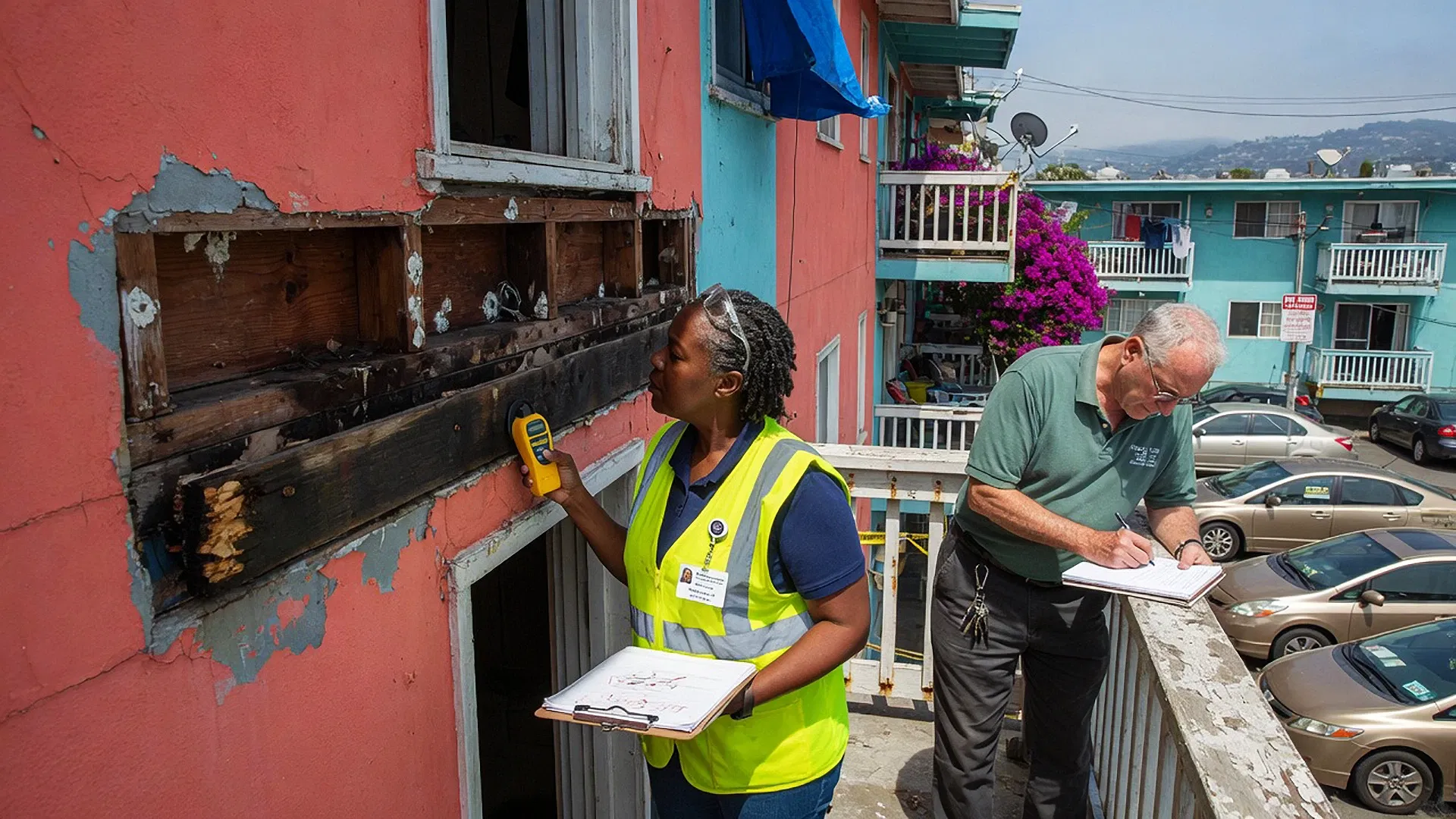
Suggested Image: Professional inspector examining balcony structure
Alt text: “SB 326 balcony inspection professional examining exterior elevated element in Oakland HOA”
What Is SB 326 and Which HOAs Must Comply?
Senate Bill 326, codified as California Civil Code Section 5551, requires condominium associations with three or more multifamily dwelling units to conduct visual inspections of exterior elevated elements (EEEs) supported by wood or wood-based products. Governor Newsom signed the legislation in August 2019, giving associations five years to complete their first inspection.
The California balcony law HOA communities must follow applies specifically to common interest developments under the Davis-Stirling Act. The law covers cantilevered balconies with wood framing, decks supported by wooden posts, exterior stairways and landings, elevated walkways, associated railings, and waterproofing systems. These elements must have walking surfaces more than six feet above ground. Professional compliance support can help determine which elements require inspection.
SB 326 does not apply to planned developments where individual owners hold fee simple title to their structures. If uncertain whether your community qualifies as a condominium or planned development, consult your governing documents or association attorney.
SB 326 Balcony Inspection Deadlines and Timeline
The initial inspection deadline under SB 326 was January 1, 2025. Unlike SB 721 for apartment buildings which received a deadline extension, the condominium deadline remained firm. Associations that missed this deadline face increased liability exposure and potential enforcement actions.
After the initial inspection, associations must reinspect every nine years—aligning with every third reserve study cycle. The Community Associations Institute helped establish this practical timeline. Buildings with certificates of occupancy issued after January 1, 2020, receive a six-year window from that date.
HOA Balcony Inspection Requirements: Sampling Methods Explained
SB 326 doesn’t require inspecting every balcony. The law mandates a “statistically significant sample” providing 95 percent confidence that results reflect the whole, with a margin of error no greater than plus or minus five percent. Inspectors must generate a random list of locations before conducting evaluations.
Licensed inspectors assess three areas: physical condition of load-bearing components, waterproofing systems protecting wood from moisture, and expected future performance. The law allows visual inspection with tools like moisture meters or infrared technology without destructive testing.
Only licensed structural engineers or architects may conduct SB 326 inspections. General contractors are not authorized. Verify credentials through the California Board for Professional Engineers or California Architects Board before signing contracts.
SB 326 Compliance California: Budgeting for Costs
SLPM Association Management Services has observed inspection costs typically ranging from $500 to $2,000 per building, depending on the number of elements, accessibility, and condition.
| Cost Factor | Impact on Price | Typical Range |
|---|---|---|
| Number of EEEs | More elements = higher cost | $50-150 per element |
| Building Height | Upper floors may require lifts | $200-500 additional |
| Condition Severity | Poor condition requires more testing | $300-800 additional |
Budget for both inspections and potential repairs. The California Department of Housing and Community Development notes that early problem identification typically reduces repair costs. SB 326 requires reports be incorporated into reserve studies—working with HOA financial management professionals helps ensure proper allocation.
What Your Inspection Report Must Include
Inspectors provide a stamped written report that becomes part of permanent records for eighteen years minimum. The report identifies inspected components, documents physical condition, notes safety dangers, projects service life, and provides repair recommendations by urgency.
When an element poses immediate threat, inspectors must notify the association immediately and local code enforcement within fifteen days. The association must restrict access until repairs are completed. Non-emergency repairs require permit applications within 120 days and completion within 120 days of approval.
Board Liability Under California Balcony Law HOA Requirements
HOA board members have fiduciary obligations to act in the association’s best interests. Under California Civil Code Section 5800, this includes investigating for latent deficiencies. Failing to complete SB 326 inspections exposes board members to personal liability.
Non-compliance risks include fines from enforcement agencies, insurance coverage denial for structural failures, and negligence lawsuits. The California Department of Insurance regulates coverage policies, but disputes require lengthy proceedings.
Document all board discussions related to SB 326 compliance in meeting minutes. SLPM Association Management Services recommends professional administrative support for proper documentation.
Working with Qualified Inspection Firms
Specialized SB 326 inspection firms have developed efficient processes and deep regulatory familiarity. Verify professional licenses, ask about similar property experience, and request information on statistical sampling approaches and turnaround times.
Many firms coordinate waterproofing specialists alongside structural engineers. Your management company coordinates logistics—scheduling access, notifying residents, and ensuring reserve study integration. Working with a full-service Bay Area association management company streamlines this process.
Frequently Asked Questions About SB 326 Balcony Inspections
Schedule inspections immediately to minimize liability exposure. Non-compliant associations face potential fines under the Davis-Stirling Act, enforcement costs, possible liens, and increased exposure to negligence claims. Board members may face personal liability for breach of fiduciary duty. Document your efforts to achieve compliance quickly.
SB 326 applies to condominium associations under the Davis-Stirling Act, not planned developments where owners hold fee simple title. However, many townhome communities are legally structured as condominiums, making them subject to SB 326. Review your CC&Rs or consult your association attorney to determine your classification.
Most Oakland HOA communities can expect inspection costs between $500 and $2,000 per building. Budget an additional contingency of twenty to thirty percent for potential follow-up testing, plus separate funds for any repairs identified through the inspection process.
California Civil Code Section 5551 requires SB 326 inspections be conducted by a licensed structural engineer or architect. Licensed general contractors are not authorized to perform these inspections, though they can complete necessary repairs identified through the process.
Associations must maintain SB 326 inspection reports for two complete inspection cycles—eighteen years minimum. Reports must also be incorporated into your reserve study. Proper record retention documents compliance efforts and provides historical context for future inspections.
SB 326 applies to condominium associations; SB 721 covers apartment buildings. Key differences include inspection frequency (nine years vs. six years), inspector qualifications, and sampling methodology. The SB 721 deadline was extended to January 2026, while SB 326 remained January 2025.
Taking the Next Step Toward SB 326 Compliance
Navigating SB 326 balcony inspection requirements doesn’t have to overwhelm your board. Understanding obligations, budgeting appropriately, and selecting qualified professionals protects residents and your association’s financial health.
SLPM Association Management Services brings over 35 years of expertise serving Oakland and SF East Bay communities. Our team coordinates inspector selection, resident communication, community maintenance integration, and compliance documentation. The Berkeley tragedy demonstrated the consequences of deferred maintenance—take compliance seriously and protect your community.
Ready to Simplify Your HOA’s SB 326 Compliance?
SLPM Association Management Services helps Oakland and SF East Bay communities navigate complex regulatory requirements with confidence.
Request a Free ProposalInternal Link Suggestions:
- “compliance support” → Compliance & Legal Support
- “HOA financial management” → Financial Management Services
- “administrative support” → Board & Administrative Support
- “Bay Area association management” → Oakland & SF Management
- “community maintenance” → Community Maintenance
External Links (6 Total):
- Follow: CA Legislature SB 326, CA Civil Code 5800, CA Dept of Insurance
- Nofollow: Community Associations Institute, CA HCD, BPELSG, CA Architects Board
Recommended Schema Markup:
- Article Schema – BlogPosting with headline, datePublished, author
- FAQPage Schema – All six FAQ questions for rich snippets
- LocalBusiness Schema – SLPM with Oakland/SF East Bay service area