
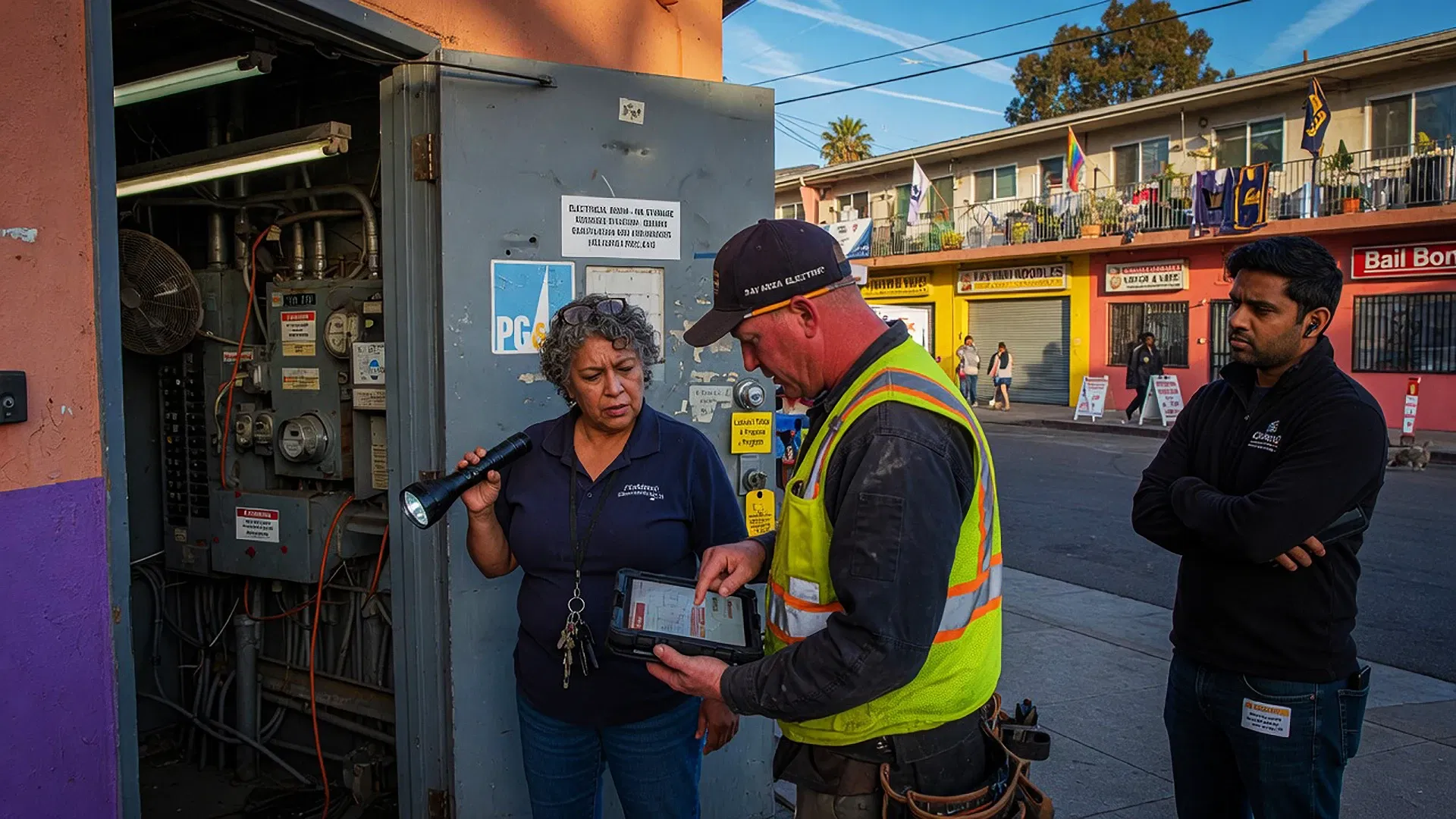
The 14-Day Utility Emergency Rule Is Brutal — What Happens When Your Aging East Bay Pipes or Wiring Fail
A burst common-area water line. A failed electrical service running through a shared wall. A gas interruption traced back to aging infrastructure. A sewer backup that exposes decades of deferred maintenance. For older East Bay HOAs, these are not theoretical risks. They are the kind of emergencies that can turn a quiet week into a board crisis.
California’s 2025 changes to the Davis-Stirling Common Interest Development Act make that pressure even more intense. Under Civil Code Section 4775, when interrupted gas, heat, water, or electrical service begins in the common area and the association is responsible for the repair, the board must commence the process to make the repairs necessary to restore service within 14 days of the interruption.
That does not mean every project must be fully completed in 14 days. But it does mean boards can no longer afford slow investigation, confused responsibility, missing vendor contacts, outdated reserve studies, or “we’ll discuss it at the next meeting” delays when essential utility service is interrupted.
The new reality: If your association is responsible for common-area utility infrastructure, you need to know who to call, who can authorize work, how repairs will be funded, and how owners will be updated before the emergency happens.
SLPM Association Management Services helps Northern California HOAs, business parks, and mixed-use communities prepare for the practical, financial, and communication pressure that comes when aging pipes, wiring, gas lines, water lines, or electrical systems fail.
What the 14-Day Utility Rule Actually Says
California Civil Code Section 4775 was amended by SB 900, effective January 1, 2025. The law addresses repair responsibility when utility services are interrupted and the issue begins in common area.
In plain English, the rule says that unless the declaration provides otherwise, or unless a public, private, or other utility service provider is responsible for the failed utility service, the association is responsible for repairs and replacements necessary to restore interrupted gas, heat, water, or electrical services that begin in the common area. That responsibility can apply even if the issue extends into a separate interest or exclusive use common area.
The brutal part: the board must commence the process to make those repairs within 14 days of the service interruption.
For boards used to slower decision cycles, that deadline can feel severe. A typical board may need to investigate the failure, determine responsibility, notify owners, obtain vendor availability, review funding, authorize work, document decisions, and communicate next steps—all while residents or commercial occupants may be without essential service.
The law also gives boards certain emergency tools. If reserves are insufficient, the association may be able to obtain competitive financing from a financial institution and levy an emergency assessment to repay the loan, subject to statutory requirements. The board must pass a resolution with written findings about the expense and why reserves do not cover the necessary cost.
Why This Hits Older Oakland and San Leandro Communities So Hard
Many East Bay communities were built long before modern expectations for electrical load, plumbing durability, water conservation, EV charging, internet infrastructure, and emergency response. Older condominium buildings, townhome communities, business parks, and mixed-use sites may have utility systems that were never designed for today’s usage patterns.
Oakland associations may also face regional private sewer lateral concerns. The East Bay Regional Private Sewer Lateral Program explains that the EPA and California Regional Water Quality Control Board required EBMUD, several East Bay cities, and one sewer district to address old, cracked sanitary sewer pipes. The City of Oakland also points property owners to regional private sewer lateral compliance requirements.
San Leandro communities face their own infrastructure issues. The City of San Leandro explains that property owners are responsible for maintaining and repairing service laterals running from the building connection to the public sewer connection, while the City maintains the sewer main.
For an HOA, those local realities collide with the SB 900 timeline. If the failed utility line begins in the common area and falls within the association’s responsibility, the board may need to act quickly even while it is still sorting out the scope, cost, and long-term fix.
Important distinction: The association, the owner, the utility provider, or the local government may be responsible depending on the governing documents, location of the failure, utility type, service provider responsibility, and applicable law. Boards should not guess during an emergency.
Fictionalized Composite Horror Stories: What Can Go Wrong
The following scenarios are fictionalized composites based on common issues older communities can face. They are not descriptions of specific associations or actual legal claims. They are included to show how quickly utility failures can become financial, legal, and community-trust emergencies when boards are not prepared.
The San Leandro Water Line That Looked Like a Unit Problem
A resident in an older San Leandro townhome community reported low water pressure and moisture along a downstairs wall. At first, the board assumed it was an owner plumbing issue. The owner called a plumber, the plumber blamed a shared supply line, and several days passed before the association realized the problem might begin in common area.
The board thought it had time to wait for the next meeting, review the governing documents, and ask for informal opinions from vendors.
More units reported pressure problems. Moisture spread. Owners became angry. The association had to coordinate emergency access, leak detection, wall openings, plumbing repairs, restoration, and responsibility analysis under intense deadline pressure.
The painful lesson was not just that the pipe failed. It was that the board had no pre-built process for determining whether a utility interruption began in common area and who could authorize immediate investigation.
The Oakland Electrical Failure Nobody Had Reserved For
An older Oakland condominium building experienced a partial electrical failure affecting several units and common-area lighting. The electrical contractor suspected aging service infrastructure behind shared walls. The board had a reserve study, but it did not clearly identify electrical service lines as a major component requiring funding.
The board believed electrical problems would be handled only when they appeared, because the system had “always worked before.”
The association faced urgent engineering questions, vendor scheduling delays, permit concerns, owner access issues, a large unplanned expense, and pressure to explain why reserves did not anticipate the failure.
SB 900 also amended Civil Code Section 5550 so that, for reserve study purposes, major components include gas, water, and electrical service to the extent the association is responsible for repair or replacement of those lines. That makes utility infrastructure harder for boards to ignore.
The Mixed-Use Building Where One Pipe Shut Down Everyone
A mixed-use building had residential units above ground-floor businesses. A water service issue began in a shared infrastructure area and affected both residences and commercial spaces. Residents wanted immediate restoration. A business owner worried about lost revenue. The board needed to understand responsibility, emergency repair authority, access, insurance, and communication all at once.
The association had treated utility systems as background infrastructure and had not mapped which systems served which parts of the property.
The emergency created competing demands from owners, tenants, vendors, and the board. The association needed a repair plan, communication plan, temporary service plan, funding plan, and documentation plan immediately.
In mixed-use communities, utility failures are rarely just maintenance problems. They can become residential habitability, business interruption, access, insurance, and governance problems at the same time.
The Board That Could Not Reach Quorum Fast Enough
A smaller East Bay HOA had a serious water interruption, but two board members were traveling and one had resigned. The remaining directors could not quickly reach quorum to vote on the repair process. Meanwhile, owners were demanding updates and vendors needed authorization.
The board assumed quorum problems were only an annual meeting issue.
The association had to rely on the reduced-quorum procedure available under Civil Code Section 4775 for the specific vote to commence the repair process, while also explaining the emergency process to frustrated owners.
The lesson was simple: emergency governance has to be planned before board availability becomes part of the crisis.
The Cost Shock: Why These Repairs Feel Financially Impossible
Utility failures are expensive because they rarely involve just one line item. A failed pipe or electrical service may create investigation costs, emergency vendor fees, permits, demolition, restoration, inspections, temporary services, engineering, owner communication, insurance coordination, and follow-up repairs.
Boards often focus on the direct repair cost and underestimate the surrounding costs.
A utility emergency may require funding for:
- Leak detection, electrical diagnostics, or utility investigation.
- Emergency plumber, electrician, restoration, or specialty contractor response.
- Wall, ceiling, slab, pavement, or landscape access work.
- Temporary water, power, heat, or access solutions.
- Permits and inspections.
- Engineering or specialty consulting.
- Restoration after repairs.
- Insurance deductible and claim documentation.
- Owner communication and meeting notices.
- Legal review of responsibility and funding authority.
- Reserve transfers, financing, or emergency assessment administration.
This is why underfunded reserves are so dangerous. When an aging utility component fails, the association does not just need a vendor. It needs money, authority, documents, communication, and a defensible timeline.
The Reserve Study Is No Longer Just Roofs, Paint, and Asphalt
Many boards are used to thinking about reserve studies in terms of visible components: roofs, paint, paving, fencing, elevators, gates, and clubhouse assets. SB 900 makes utility infrastructure harder to overlook.
Civil Code Section 5550 now states that, for reserve study purposes, “major components” include gas, water, and electrical service to the extent the association is responsible for repair or replacement of those lines under Civil Code Section 4775.
For older East Bay communities, that should trigger serious questions:
- Does the reserve study identify association-responsible gas, water, and electrical lines?
- Does the board understand where common-area utility infrastructure begins and ends?
- Are older lines original to the development?
- Has the association had recurring leaks, outages, breaker issues, or utility complaints?
- Are drawings, maps, as-builts, or utility diagrams available?
- Does the reserve analyst have enough information to price utility components realistically?
- Are reserves sufficient if a major line fails this year?
Practical board move: Ask the reserve study provider specifically how SB 900 utility infrastructure has been considered. Do not assume it is included simply because the association has a current reserve study.
What “Commence the Process” Should Look Like in Practice
The statute uses the phrase “commence the process.” Boards should ask association counsel how that applies to their specific facts, but from an operational standpoint, the board should be able to show prompt, documented movement toward restoring service.
Depending on the emergency, that may include:
- Receiving and logging the service interruption report.
- Determining whether the issue involves gas, heat, water, or electrical service.
- Determining whether the failure appears to begin in common area.
- Reviewing governing documents for maintenance responsibility.
- Contacting the appropriate utility provider, if applicable.
- Dispatching a qualified vendor to investigate.
- Notifying the board and association counsel when needed.
- Holding a board meeting or using permitted emergency procedures.
- Approving diagnostic work or repair work.
- Documenting reserve insufficiency and financing needs, if applicable.
- Communicating realistic updates to affected owners or occupants.
The key is documentation. If the association is challenged later, it should be able to show what it knew, when it knew it, who it contacted, what steps were authorized, and how the board moved toward restoration.
A 14-Day Utility Emergency Timeline for East Bay Boards
Every situation is different, and boards should follow their governing documents, contracts, insurance requirements, and counsel’s advice. The following framework shows how a prepared association can move quickly without losing control.
Log the report immediately. Identify the affected service: gas, heat, water, or electrical. Determine whether there is a life-safety issue requiring 911, the utility provider, or emergency services.
Review the governing documents, available utility maps, prior work orders, and property layout. Contact the utility provider if the failure may be within provider responsibility.
Send a qualified vendor to investigate. For older Oakland and San Leandro properties, this may require plumbers, electricians, leak detection, restoration vendors, or specialty contractors.
Notify the board of the known facts, affected areas, immediate safety issues, and next steps. Communicate to affected owners or occupants without guessing or overpromising.
Determine whether the work is a temporary repair, full replacement, or phased project. Review reserves, insurance, emergency assessment options, and possible competitive financing if reserves are insufficient.
Obtain board authorization as required. If the board cannot reach quorum, evaluate the reduced-quorum procedure available under Civil Code Section 4775 for the specific vote to commence the repair process.
Confirm vendor scheduling, signed proposals, financing steps, emergency assessment resolutions if applicable, owner updates, access coordination, and documentation of the board’s action to commence the repair process.
Why Boards Cannot Wait Until the Pipe Breaks
The boards that handle utility emergencies best are not lucky. They are prepared. They have current records, current vendor contacts, clear emergency authority, realistic reserves, and a management team that knows how to move.
Waiting until an interruption occurs creates avoidable problems:
- No one knows where the utility lines run.
- The reserve study does not identify the failed component.
- The board does not know whether the association or owner is responsible.
- The utility company says it is not their issue.
- Vendors are unavailable or unwilling to respond quickly.
- Owners demand immediate answers before the board has facts.
- The association has insufficient reserves and no financing plan.
- Directors disagree about spending authority.
- Communications become emotional, inconsistent, or legally risky.
Under the 14-day rule, confusion is expensive. Preparedness is not optional.
Special Problems for Business Parks and Mixed-Use Sites
Business parks and mixed-use associations face added complexity because utility interruptions may affect business operations, tenants, customers, deliveries, refrigeration, security, parking access, and residential occupants at the same time.
A failed electrical service in a residential HOA is serious. A failed electrical service in a mixed-use site may also affect retail operations, exterior signage, garage gates, shared lighting, fire/life-safety systems, elevators, access control, and commercial tenants trying to stay open.
Mixed-use and business park boards should identify:
- Which utility systems serve residential areas, commercial areas, or both.
- Which spaces are separate interests, common area, or exclusive use common area.
- Who receives emergency notices: owners, tenants, occupants, business operators, or all of them.
- Whether commercial leases create additional notice or access issues.
- Which vendors can work after hours without shutting down the entire property.
- Whether temporary service options are available.
- How the board will coordinate access to locked utility rooms, meters, roofs, garages, or tenant spaces.
These questions should be answered before a utility interruption forces everyone to improvise.
Funding the Emergency Without Losing Owner Trust
The financial pain of a utility emergency is often as difficult as the repair itself. Owners may be shocked that the association has to borrow money or levy an emergency assessment. The board may be frustrated that reserves are not enough. Everyone wants to know why the problem was not caught earlier.
California Civil Code Section 5610 allows certain assessment increases for emergency situations, including extraordinary expenses necessary to operate, repair, or maintain the common interest development, or any part of it for which the association is responsible, when a threat to personal health or safety or another hazardous condition or circumstance is discovered.
When funding is needed, the board should communicate clearly:
- What failed.
- Who determined the likely cause.
- Why the association appears responsible.
- What work is needed immediately.
- What work may be temporary versus permanent.
- What reserves are available.
- Whether insurance may apply.
- Whether financing or an emergency assessment is being considered.
- What written findings or resolutions the board is required to make.
- How owners will receive updates.
Trust principle: Owners may not like an emergency assessment, but they are more likely to accept it when the board explains the facts, documents the process, and avoids vague statements like “we had no choice.”
Vendor Readiness Matters More Than Ever
Under deadline pressure, boards often call the first vendor who answers. That can lead to inflated pricing, weak documentation, incomplete scope, or work performed by the wrong contractor.
Before an emergency happens, associations should build a qualified vendor bench for:
- Plumbing and leak detection.
- Electrical troubleshooting and repair.
- Gas line specialists.
- Restoration and water mitigation.
- General contractors.
- Engineering or building diagnostics.
- Sewer lateral inspection and repair.
- Permit coordination where applicable.
Boards should also verify contractor licensing where required. The Contractors State License Board provides a public license lookup tool that allows consumers and associations to check contractor license information.
A 14-day deadline does not eliminate the need for good vendor controls. It makes those controls more important.
A 30-Day Readiness Plan for Aging East Bay Utility Systems
Boards do not need to solve every infrastructure problem in one month. But they can make meaningful progress quickly.
Review CC&Rs, condominium plans, maintenance matrices, utility maps, and prior repair history to identify which gas, water, heat, and electrical systems may be association responsibility.
Confirm after-hours contacts, licensing, insurance, response areas, backup vendors, and emergency rates for plumbing, electrical, restoration, sewer lateral, and diagnostic vendors.
Ask whether gas, water, and electrical components are properly included in the reserve study where the association is responsible. Review insurance reporting procedures and deductibles.
Create a written process for intake, board notification, emergency meetings, electronic voting where allowed, reduced quorum situations, owner communication, documentation, and funding review.
Questions Every East Bay Board Should Ask Now
- Do we know which utility lines begin in common area?
- Do our governing documents shift any utility responsibilities away from the association?
- Do we know when a utility provider or local government is responsible?
- Does our reserve study include association-responsible gas, water, and electrical lines?
- Do we have current maps, as-builts, or diagrams?
- Do we have emergency plumbers, electricians, gas specialists, and restoration vendors ready?
- Who can authorize immediate diagnostic work?
- Can the board reach quorum quickly?
- Do we understand the reduced-quorum and electronic voting options under Civil Code Section 4775?
- Do we have a process for competitive financing if reserves are insufficient?
- Do we have owner communication templates for utility interruptions?
- Do we know how to document the process within the 14-day period?
How Professional Management Helps Under the 14-Day Rule
A utility emergency is not just a maintenance ticket. It is a fast-moving combination of legal responsibility, vendor dispatch, board authority, funding decisions, owner communication, documentation, and follow-up.
SLPM Association Management Services helps East Bay HOAs, business parks, and mixed-use communities organize the systems that matter when aging infrastructure fails: vendor coordination, emergency response procedures, board communication, reserve study coordination, maintenance tracking, owner updates, records, and practical follow-through.
For older San Leandro, Oakland, and East Bay properties, that structure can make the difference between a controlled emergency and a chaotic, trust-damaging crisis.
Final Checklist: Surviving a Common-Area Utility Failure
- Confirm whether the interruption involves gas, heat, water, or electrical service.
- Determine whether the failure appears to begin in common area.
- Check whether the governing documents assign responsibility differently.
- Contact the utility provider when provider responsibility is possible.
- Dispatch qualified diagnostics quickly.
- Notify the board and document all steps.
- Review reserves, insurance, financing, and emergency assessment options.
- Communicate clearly with affected owners or occupants.
- Use proper board authorization procedures.
- Document commencement of the repair process within the 14-day period.
- Update the reserve study after the emergency if utility components were missing or underpriced.
- Build better readiness before the next failure.
Do Not Let a 14-Day Deadline Expose Years of Deferred Planning
Aging pipes, wiring, gas lines, water lines, and electrical systems do not wait for a convenient board meeting. When essential utility service fails, your association needs a process that can move quickly, document decisions, coordinate vendors, communicate with owners, and protect the community from unnecessary cost and confusion.
SLPM Association Management Services helps Northern California HOAs, business parks, and mixed-use communities prepare for urgent infrastructure issues with practical management systems, vendor coordination, board support, and local East Bay experience.
If your board is worried about aging infrastructure, underfunded reserves, emergency assessments, or the new 14-day utility repair process, SLPM Association Management Services can help your association build a better plan.
Request an Association Management ProposalLegal note: This article is for general educational purposes only and is not legal advice. Utility repair responsibility, emergency assessment authority, financing, reserve funding, owner responsibility, utility-provider responsibility, and board procedures can vary based on current law, governing documents, contracts, facts, and property conditions. Boards should consult qualified California association counsel, reserve professionals, insurance professionals, and licensed contractors as appropriate.
Sources
- California Legislative Information, Civil Code Section 4775 — Association and Owner Maintenance Responsibilities; Utility Service Interruption Repairs: https://leginfo.legislature.ca.gov/faces/codes_displaySection.xhtml?lawCode=CIV§ionNum=4775.
- California Legislative Information, Civil Code Section 5550 — Reserve Study Requirements and Major Components: https://leginfo.legislature.ca.gov/faces/codes_displaySection.xhtml?lawCode=CIV§ionNum=5550.
- California Legislative Information, Civil Code Section 5610 — Emergency Assessment Situations: https://leginfo.legislature.ca.gov/faces/codes_displaySection.xhtml?lawCode=CIV§ionNum=5610.
- California Legislative Information, Civil Code Section 5735 — Assignment or Pledge of Assessment Rights to Financial Institutions: https://leginfo.legislature.ca.gov/faces/codes_displaySection.xhtml?lawCode=CIV§ionNum=5735.
- LegiScan, California Senate Bill 900, Chapter 288, Statutes of 2024 — Common Interest Developments: Repair and Maintenance: https://legiscan.com/CA/text/SB900/id/3021794
- East Bay Regional Private Sewer Lateral Program: https://www.eastbaypsl.com/
- East Bay Municipal Utility District — Private Sewer Laterals: https://www.ebmud.com/wastewater/private-sewer-laterals
- City of Oakland — Private Sewer Maintenance Ordinance: https://www.oaklandca.gov/Community/Community-Development/Sustainability-Environment/Sustainability-Plans/Private-Sewer-Maintenance-Ordinance
- City of San Leandro — Sewer System: https://www.sanleandro.org/898/Sewer-System
- City of San Leandro — Sewer Repair and Maintenance FAQ: https://www.sanleandro.org/Faq.aspx?QID=235
- Contractors State License Board — Check a Contractor License: https://www.cslb.ca.gov/onlineservices/checklicenseII/checklicense.aspx
- Association of Bay Area Governments — Earthquake Data and Research: https://abag.ca.gov/our-work/resilience/data-research/earthquake