
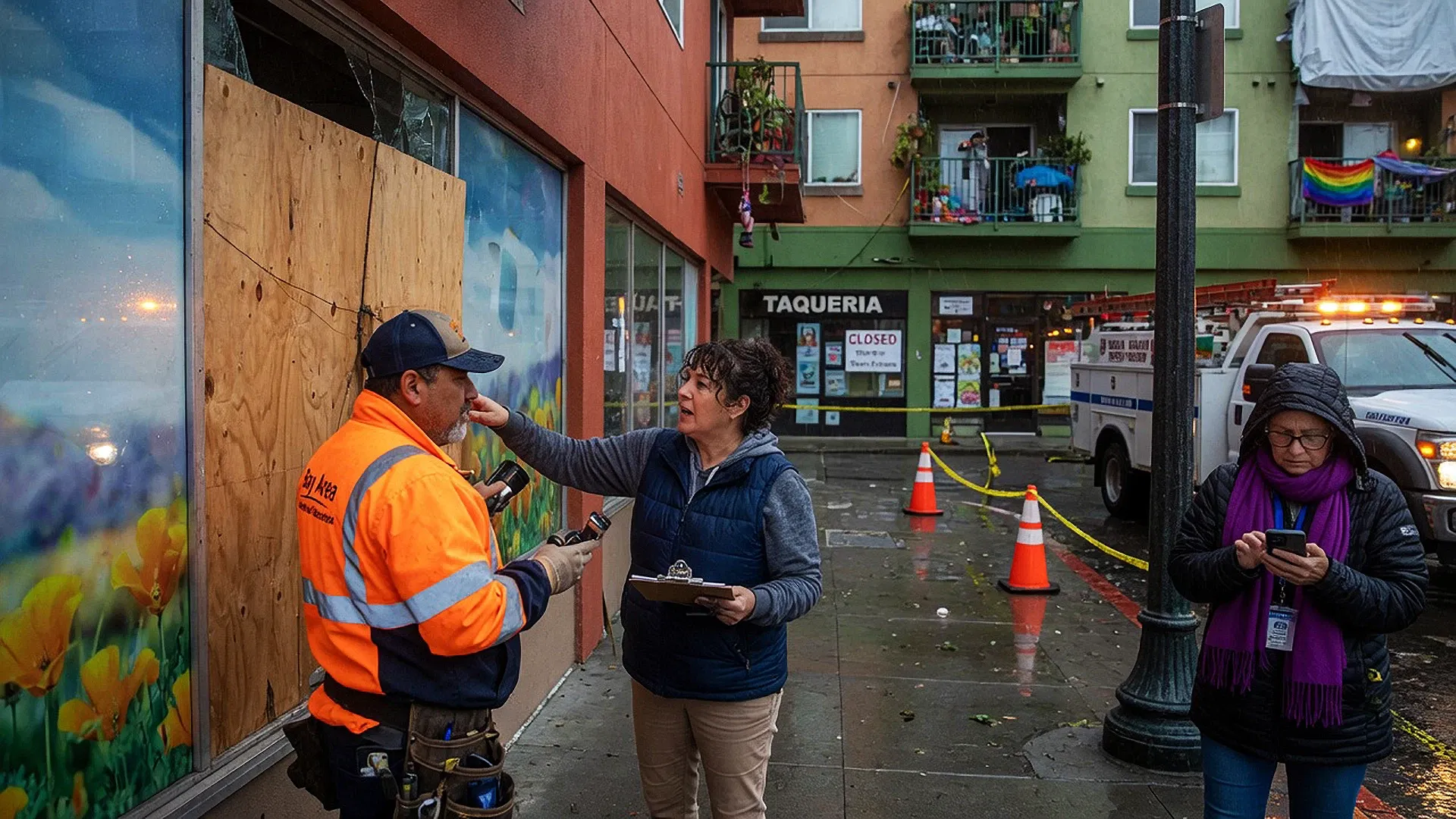
Your Management Company Vanishes After a Storm — Why 24/7 Accountability Actually Matters in Wildfire and Earthquake Country
The worst time to discover that your management company is hard to reach is during a storm, power outage, wildfire warning, roof leak, earthquake, gate failure, broken pipe, or fire alarm emergency.
For an HOA, business park, or mixed-use property, silence during a crisis is not a minor service issue. It can mean delayed mitigation, confused residents, frustrated business tenants, unmanaged vendors, avoidable property damage, insurance complications, and a board left trying to make emergency decisions without accurate information.
In the East Bay, where communities face winter storms, aging infrastructure, wildfire exposure, earthquake risk, hillside drainage issues, utility interruptions, and dense mixed-use environments, emergency accountability is not a luxury. It is part of responsible community operations.
True 24/7 accountability is not just an after-hours phone number. It is a defined system for triage, escalation, vendor dispatch, board communication, documentation, and follow-through until the emergency is stabilized.
SLPM Association Management Services helps East Bay HOAs, business parks, and mixed-use communities think beyond routine management and build the kind of operational structure that matters most when something goes wrong.
Why “Ghosting” During a Crisis Destroys Trust
Owners and tenants may tolerate a delayed response to a routine landscaping question. They are far less forgiving when water is entering a building, a tree has fallen across a driveway, smoke is in the air, an elevator is down, a gate will not open, or a common-area electrical problem is affecting safety.
When a management company disappears during an emergency, the board often hears the same complaints:
- “No one answered the emergency line.”
- “We did not know whether a vendor was coming.”
- “Residents were sharing rumors because there was no official update.”
- “The board had to call plumbers, electricians, and restoration companies ourselves.”
- “No one documented the damage for insurance.”
- “The manager followed up days later as if it were a normal work order.”
That kind of experience changes how people view the association. Even if the manager eventually responds, the damage to confidence may already be done. Owners begin to question whether assessments are being used wisely. Board members feel unsupported. Vendors receive conflicting instructions. Residents start bypassing official channels.
Emergency silence creates a leadership vacuum. In that vacuum, rumors, frustration, duplicate vendor calls, social media complaints, and preventable confusion can spread quickly.
Why East Bay Communities Need a Higher Standard
Emergency readiness matters everywhere, but it is especially important in Northern California and the East Bay.
The U.S. Geological Survey has reported a 72 percent probability of at least one magnitude 6.7 or greater earthquake striking somewhere in the San Francisco Bay region before 2043. The Association of Bay Area Governments also emphasizes that earthquake planning and mitigation are essential for Bay Area homeowners, cities, and counties.
Wildfire risk adds another layer. CAL FIRE explains that defensible space means creating and maintaining a buffer between buildings and vegetation to help slow fire spread, while home hardening and wildfire preparedness can improve a structure’s chances of surviving a wildfire.
Storms and winter atmospheric river events can create a different kind of emergency: roof leaks, drainage backups, slope movement, fallen branches, electrical outages, flooded garages, failed sump pumps, gate malfunctions, and water intrusion into common areas.
For business parks and mixed-use sites, the stakes can be even more complex. A delayed response may affect business operations, customer access, commercial deliveries, residential habitability, security, parking, utilities, insurance reporting, and tenant relations at the same time.
What 24/7 Accountability Is — and What It Is Not
Many management companies say they offer emergency support. Boards should look closely at what that actually means.
24/7 accountability is not:
- A voicemail box that no one monitors.
- A generic answering service that only takes messages.
- A manager who checks email the next morning.
- A vendor list with no dispatch authority.
- A promise to “circle back” after the emergency has already escalated.
- A board president personally coordinating every emergency after hours.
Real 24/7 accountability should include:
- A clear emergency intake process.
- Defined criteria for what qualifies as an emergency.
- After-hours escalation to people who can act.
- Current vendor contacts for emergency trades.
- Board notification protocols.
- Authority limits for emergency spending.
- Owner and tenant communication templates.
- Documentation for insurance and board records.
- Follow-up after stabilization.
The difference is simple: a message-taking system records a problem. An accountability system moves the problem toward resolution.
The Legal and Operational Context for HOA Emergencies
California associations must balance urgency with proper governance. Most board business requires proper notice and agenda procedures, but California law also recognizes that emergency board meetings may be necessary when circumstances could not have been reasonably foreseen and require immediate attention.
California Civil Code also provides that, unless the declaration states otherwise, an association is generally responsible for repairing, replacing, and maintaining common areas. That makes emergency responsiveness especially important when the issue involves roofs, drainage, common-area utilities, gates, lighting, elevators, fire/life-safety systems, or other shared components.
Reserve planning is part of the same conversation. California law requires certain associations to conduct periodic reserve studies of accessible major components the association is obligated to repair, replace, restore, or maintain. A strong reserve process does not prevent every emergency, but it helps boards understand which components are aging, expensive, and vulnerable.
Board takeaway: Emergency response is not separate from governance. The association should know who can authorize action, which vendors to call, what records to keep, and when the board must meet.
What a Dedicated Emergency Coverage Model Looks Like
A dedicated-team model does not mean one manager personally answers every call at every hour. That is not realistic or sustainable. It means the association has a layered system with people, vendors, records, escalation rules, and communication tools already in place.
1. Emergency Triage
Not every after-hours issue is a true emergency. A dedicated system separates urgent safety and property-protection issues from routine maintenance requests.
Examples of emergency issues may include:
- Active water intrusion or flooding.
- Fire, smoke, or fire alarm system issues.
- Storm damage affecting access or safety.
- Electrical hazards in common areas.
- Elevator entrapment or major elevator outage.
- Gate or access failure affecting security or emergency access.
- Major plumbing backup involving common-area systems.
- Structural damage after an earthquake or impact event.
- Downed trees or large branches blocking roads, walkways, or exits.
2. Vendor Dispatch
Emergencies move faster when vendor relationships are already established. Boards should not be searching online for a plumber, roofer, restoration company, electrician, arborist, gate technician, or fire alarm vendor while damage is actively occurring.
A strong emergency vendor system includes:
- Pre-vetted emergency vendors.
- Current certificates of insurance.
- License information where applicable.
- After-hours contact numbers.
- Service areas and response expectations.
- Spending authorization limits.
- Backup vendors when the first vendor is unavailable.
3. Board Escalation
The board should not be surprised by a major emergency after the fact. But the board also should not be forced to approve every minor dispatch in the middle of the night.
A practical escalation policy defines:
- Which emergencies require immediate board notification.
- Who on the board should be contacted first.
- Which expenses can be authorized before full board review.
- When an emergency board meeting may be needed.
- How updates should be documented.
4. Owner, Resident, and Tenant Communication
During emergencies, people want to know three things: what happened, what is being done, and what they should do next.
Communication does not need to be perfect in the first hour. It needs to be timely, calm, and useful.
Examples of helpful emergency updates include:
- “A vendor has been dispatched and is expected onsite.”
- “Please avoid the north parking area due to a fallen tree.”
- “The gate is being held open temporarily while emergency access is restored.”
- “Water intrusion has been reported in Building B. A restoration vendor has been contacted.”
- “Please call 911 for immediate life-safety emergencies. The association is coordinating common-area response.”
5. Documentation and Follow-Through
The emergency is not over when the first vendor leaves. The association still needs photos, invoices, incident notes, owner reports, insurance information, board updates, and follow-up repairs.
Without documentation, boards may struggle to understand what happened, justify emergency spending, pursue insurance claims, identify recurring problems, or communicate next steps to the community.
Storm Response: What Should Happen in the First 24 Hours
A severe storm can create dozens of simultaneous issues across a community. The first 24 hours should focus on life safety, access, mitigation, and communication.
Identify whether the issue involves immediate danger, active water intrusion, blocked access, electrical hazards, fallen trees, fire/life-safety equipment, or common-area damage. Direct residents to emergency services for life-safety situations.
Dispatch appropriate vendors based on the issue: plumber, restoration company, roofer, arborist, electrician, gate technician, elevator company, or general maintenance contractor. Notify the board when the issue meets the escalation threshold.
Provide practical updates about access restrictions, vendor activity, safety concerns, temporary closures, or expected next steps. Avoid speculation and update as facts become available.
Collect photos, vendor notes, affected-area information, invoices, and reports. Confirm whether additional mitigation or temporary protection is needed.
Move from immediate response to repair planning, insurance coordination, board decisions, owner updates, and long-term corrective work.
Wildfire Readiness: Communication Before Smoke Is in the Air
Wildfire preparedness is not only a rural issue. Many East Bay communities sit near hillsides, open space, dry vegetation, evacuation routes, older electrical infrastructure, or areas affected by public safety power shutoffs and smoke events.
CAL FIRE emphasizes defensible space and home hardening as important wildfire preparedness strategies. For associations, that means boards should think about vegetation management, roof and gutter maintenance, access routes, emergency contact information, communication systems, and vendor availability before fire conditions become urgent.
Association wildfire readiness may include:
- Reviewing defensible space obligations for common areas.
- Maintaining vegetation near buildings, fences, and access routes.
- Cleaning common-area gutters and roofs where the association is responsible.
- Confirming emergency contact information for owners and tenants.
- Identifying evacuation-route communication procedures.
- Planning for smoke, power outage, and access-control issues.
- Coordinating with vendors before red flag conditions.
- Keeping board contact and emergency vendor lists current.
Best practice: Send preparedness reminders before the highest-risk season, not only when fire danger is already elevated. Owners and tenants respond better when they have time to act.
Earthquake Response: The Emergency You Cannot Schedule
Earthquakes create a different kind of management challenge. There may be no warning, no predictable damage pattern, disrupted communications, utility interruptions, elevator issues, cracked paving, damaged fire systems, garage access problems, or structural concerns that require professional review.
Ready.gov and FEMA emphasize emergency planning, continuity, communications, and recovery planning for organizations. For associations, earthquake readiness should focus on the practical question: what happens in the first few hours after shaking stops?
Post-earthquake association response should consider:
- Life-safety concerns and 911 emergencies.
- Common-area damage reports.
- Elevator status and entrapment protocols.
- Fire sprinkler, alarm, and life-safety system status.
- Gas, water, electrical, and sewer concerns.
- Garage, gate, and access-control functionality.
- Temporary closure of unsafe common areas.
- Board and owner communication if systems are available.
- Documentation for insurance and engineering review.
A management company does not replace emergency responders, structural engineers, utilities, or local authorities. But a prepared management team can help the board organize information, dispatch appropriate vendors, communicate with owners, and move from confusion to coordinated recovery.
Business Parks and Mixed-Use Properties Need Extra Coordination
Emergency management becomes more complex when a property includes businesses, offices, retail tenants, restaurants, residential owners, parking facilities, shared utilities, loading areas, elevators, and public-facing spaces.
In a mixed-use setting, a storm or earthquake may affect groups differently. A residential owner may be focused on safety and access. A business tenant may be worried about opening hours, customer entry, deliveries, refrigeration, security, or revenue loss. The board may be focused on liability, common-area responsibility, vendor dispatch, and insurance reporting.
A mixed-use emergency plan should identify:
- Residential and commercial contact lists.
- After-hours business contacts.
- Common-area versus tenant-space responsibilities.
- Loading dock, parking, and customer access procedures.
- Trash, grease, drainage, and utility concerns.
- Security responsibilities during access failures.
- Communication channels for owners, tenants, and occupants.
- Vendor priority rules when multiple areas are affected.
The more complex the property, the more important it is to know the response structure before the emergency happens.
Questions Every Board Should Ask Its Management Company
Boards do not need to wait for a disaster to find out whether their management company is prepared. The following questions can reveal whether the association has real emergency accountability or only a vague promise.
- Who answers emergency calls after hours?
- What qualifies as an emergency?
- Who decides whether to dispatch a vendor?
- Which vendors are available after hours?
- Are emergency vendor contacts tested and updated?
- What spending authority exists before board approval?
- When is the board notified?
- How are owners or tenants updated?
- How are incidents documented?
- Who follows up after the initial emergency is stabilized?
- How are insurance-related documents and photos preserved?
- What happens if the assigned manager is unavailable?
If the answers are vague, the board should treat that as a warning sign.
A 30-Day Emergency Accountability Reset
Associations can make meaningful progress quickly by organizing emergency information before the next storm, outage, red flag warning, or earthquake.
Confirm board contacts, manager contacts, owner emergency contacts, tenant contacts, utility contacts, vendor contacts, insurance contacts, and after-hours procedures.
Identify which issues require immediate dispatch, which require board notification, which require owner communication, and which can wait for normal business hours.
Verify vendor availability, backup vendors, insurance certificates, licenses where applicable, emergency rates, spending limits, and dispatch procedures.
Prepare simple templates for storm updates, water intrusion, gate failure, elevator outage, fire alarm issues, earthquake damage reports, and temporary closures.
Common Warning Signs Your Emergency Coverage Is Too Weak
A management relationship may look acceptable during normal months but fail under pressure. Boards should watch for early warning signs.
Red flags include:
- After-hours calls are routed to voicemail with no clear escalation.
- The manager cannot name the association’s emergency vendors.
- The board does not know who can authorize emergency work.
- Owner communications are delayed until the next business day.
- There is no written emergency procedure.
- Vendor contact lists are outdated.
- Photos, invoices, and incident notes are not organized.
- Every emergency becomes the board president’s personal project.
- Residents receive more information from neighbors than from the association.
- The management company treats urgent property-protection issues like routine work orders.
How Professional Management Rebuilds Trust After a Crisis
If a community has already experienced management ghosting during an emergency, trust can be rebuilt—but only through visible operational change.
Owners do not need vague promises that “communication will improve.” They need to see a better system.
Trust-rebuilding steps include:
- Publishing clearer emergency contact instructions.
- Explaining what qualifies as an emergency.
- Updating owner and tenant contact information.
- Sharing post-incident summaries when appropriate.
- Creating better vendor response procedures.
- Clarifying board and management roles.
- Improving documentation for insurance and records.
- Reviewing lessons learned after major incidents.
SLPM Association Management Services supports East Bay associations by helping boards organize emergency communication, vendor coordination, board follow-up, documentation, maintenance planning, and owner-facing accountability.
Final Checklist: What Real Emergency Accountability Looks Like
- Emergency calls are answered or escalated through a defined process.
- There is a written distinction between routine issues and true emergencies.
- Emergency vendors are current, vetted, and reachable.
- The board knows who can authorize urgent work.
- Owners and tenants know how to report urgent issues.
- Common-area responsibilities are understood before damage occurs.
- Storm, wildfire, earthquake, and outage communication templates are ready.
- Emergency board meeting procedures are understood.
- Photos, reports, invoices, and vendor notes are preserved.
- The association follows up after stabilization, not just during the first call.
- Reserve planning informs long-term risk reduction.
- The management company acts like a partner, not a message-taker.
Do Not Wait for the Next Emergency to Test Your Management Company
Storms, earthquakes, wildfire conditions, outages, and urgent property failures are stressful enough. Your board should not have to wonder whether anyone is going to answer, dispatch help, update the community, or document what happened.
SLPM Association Management Services helps East Bay HOAs, business parks, and mixed-use communities create practical management systems built around responsiveness, vendor coordination, board support, and community trust.
If your board is tired of unanswered calls, delayed follow-up, or uncertainty during urgent situations, SLPM Association Management Services can help your association build a more accountable management process.
Request an Association Management ProposalLegal note: This article is for general educational purposes only and is not legal advice. Emergency response, maintenance responsibility, insurance reporting, board authority, and vendor authorization can vary based on governing documents, contracts, local conditions, and current law. Boards should consult qualified California association counsel, insurance professionals, and emergency authorities as appropriate.
Sources
- California Governor’s Office of Emergency Services — Planning & Preparedness: https://www.caloes.ca.gov/office-of-the-director/operations/planning-preparedness-prevention/planning-preparedness/
- California Governor’s Office of Emergency Services — California State Emergency Plan: https://www.caloes.ca.gov/office-of-the-director/operations/planning-preparedness-prevention/planning-preparedness/california-state-emergency-plan/
- CAL FIRE — Prepare: https://www.fire.ca.gov/prepare
- Ready for Wildfire — Wildfire Preparedness: https://www.readyforwildfire.org/
- U.S. Geological Survey — Earthquake Outlook for the San Francisco Bay Region 2014–2043: https://pubs.usgs.gov/publication/fs20163020
- Association of Bay Area Governments — Earthquake Data and Research: https://abag.ca.gov/our-work/resilience/data-research/earthquake
- Ready.gov — Ready Business: https://www.ready.gov/business
- Ready.gov — Emergency Plans: https://www.ready.gov/business/emergency-plans
- FEMA — Continuity Resource Toolkit: https://www.fema.gov/emergency-managers/national-preparedness/continuity
- U.S. Department of Homeland Security — Prepare My Business for an Emergency: https://www.dhs.gov/prepare-my-business-emergency
- California Legislative Information, Civil Code Section 4775 — Association and Owner Maintenance Responsibilities: https://leginfo.legislature.ca.gov/faces/codes_displaySection.xhtml?lawCode=CIV§ionNum=4775.
- California Legislative Information, Civil Code Section 4923 — Emergency Board Meetings: https://leginfo.legislature.ca.gov/faces/codes_displaySection.xhtml?lawCode=CIV§ionNum=4923.
- California Legislative Information, Civil Code Section 4930 — Board Meeting Agenda and Emergency Action Rules: https://leginfo.legislature.ca.gov/faces/codes_displaySection.xhtml?lawCode=CIV§ionNum=4930.
- California Legislative Information, Civil Code Section 5550 — Reserve Study Requirements: https://leginfo.legislature.ca.gov/faces/codes_displaySection.xhtml?lawCode=CIV§ionNum=5550.