
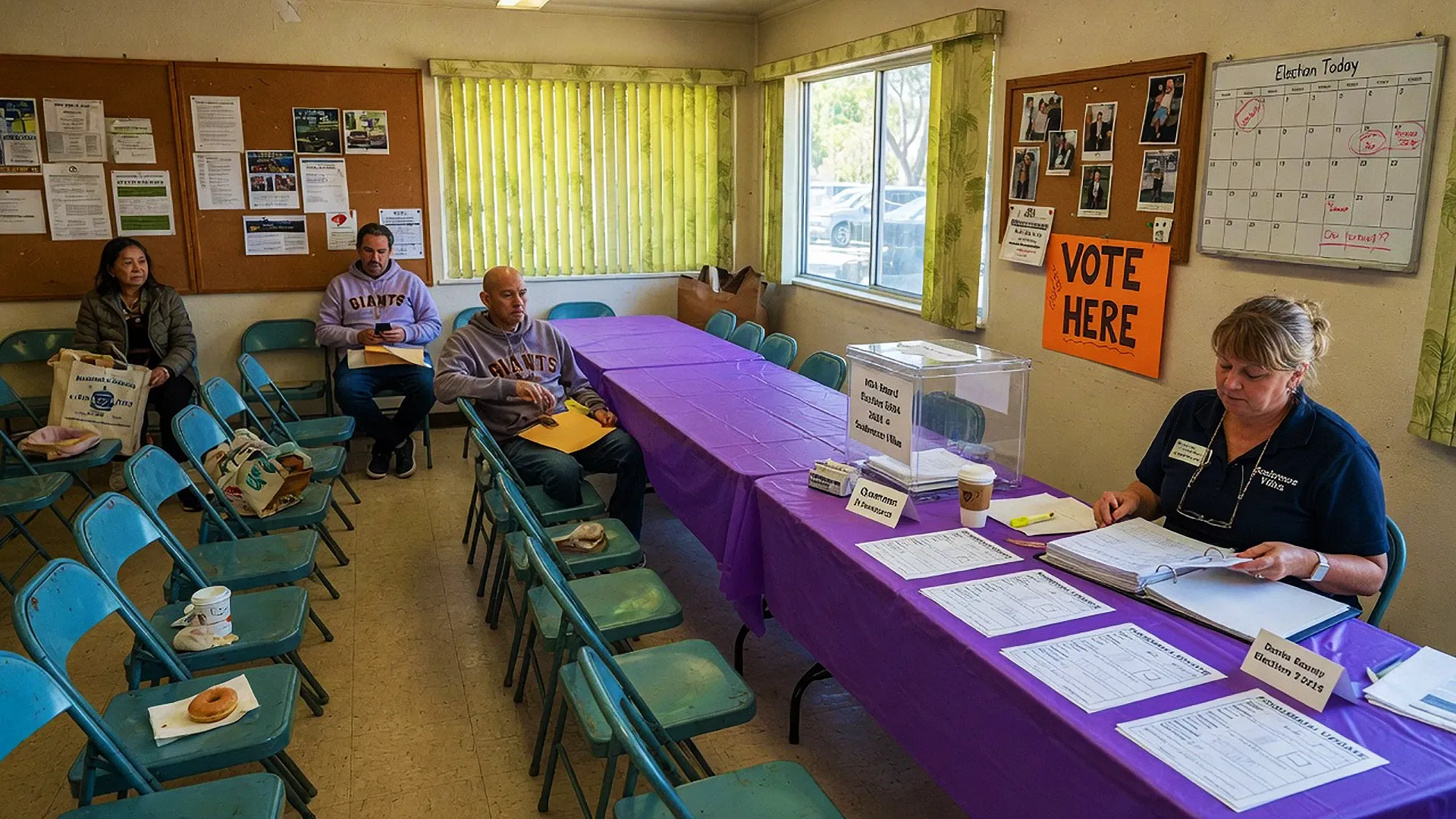
Board Members Are Ghosting in Droves: The Burnout and Apathy Crisis No One in Northern California HOAs Wants to Admit
The president stopped answering emails. The treasurer says they are done after the next budget cycle. The secretary has not updated minutes in three months. The annual meeting is coming, but no one wants to run. Owners complain constantly, but when nominations open, the room goes silent.
This is the quiet governance crisis spreading through many Northern California HOAs, business associations, and mixed-use communities. The buildings still need repairs. Insurance still has to renew. Budgets still have to pass. Vendors still need decisions. Records requests still have deadlines. Owners still expect answers. But the volunteer board members who make the system work are exhausted.
There is not one public dashboard proving that every East Bay HOA is losing directors faster than ever. But the pressure points are visible: post-2025 law changes, rising insurance anxiety, enforcement frustration, utility repair mandates, balcony inspections, special assessment backlash, owner hostility, and the simple reality that most directors are unpaid volunteers with jobs, families, health concerns, and limited time.
The uncomfortable truth: volunteer governance only works when the volunteer role is sustainable. When board service becomes a second job with personal liability fears and constant conflict, good people stop volunteering.
SLPM Association Management Services helps East Bay and Northern California communities reduce board burnout by creating better systems for meetings, records, vendors, budgets, communication, compliance calendars, owner issues, and follow-through.
Why Board Burnout Is Getting Worse
Board service used to feel manageable in many smaller communities. Directors met monthly or quarterly, approved invoices, discussed landscaping, reviewed a budget, handled a few complaints, and planned for roof or paving projects.
That world is disappearing for many associations.
Today’s East Bay board members are dealing with:
- Insurance premiums that can double or become difficult to place.
- Underfunded reserves and major special assessment pressure.
- SB 900 utility repair obligations for certain gas, heat, water, and electrical service interruptions.
- Exterior elevated element inspection and repair obligations for qualifying condominium communities.
- AB 130 enforcement changes, including the $100 cap on most HOA monetary penalties and new cure procedures.
- Owners who expect immediate responses at all hours.
- Vendor shortages, inflated bids, and emergency repair pricing.
- Records requests, election requirements, meeting notice rules, and open forum expectations.
- Social media complaints, text threads, email chains, and accusations of secrecy.
- Fear that one wrong decision could lead to a lawsuit, recall, insurance problem, or personal blame.
The job has become more technical, more emotional, more expensive, and more legally sensitive. Yet in many communities, the role is still treated as a casual volunteer position that anyone should be willing to accept.
The Legal Burden on Volunteer Directors Is Real
California law does provide protections for volunteer directors, but those protections are not the same as immunity from stress, conflict, or responsibility.
California Corporations Code Section 7231 requires directors to perform their duties in good faith, in a manner they believe to be in the best interests of the corporation, and with the care, including reasonable inquiry, that an ordinarily prudent person in a like position would use under similar circumstances.
California Civil Code Section 5800 also provides certain liability protections for qualifying volunteer directors and officers of residential or mixed-use common interest developments, but those protections depend on criteria such as acting within the scope of association duties, acting in good faith, not acting willfully or with gross negligence, and the association maintaining required insurance coverage.
Translation for board members: you do not need to be perfect, but you do need to act carefully, document decisions, make reasonable inquiry, rely on qualified professionals when needed, and avoid improvising major governance decisions.
That is a lot to ask from unpaid volunteers who may have never read the governing documents before joining the board.
Post-2025 Law Changes Made the Job Feel Even Heavier
Many board members feel that California keeps adding more responsibility without adding more volunteers. Several recent and current requirements have intensified that feeling.
AB 130: Enforcement Got More Procedural
AB 130 changed the way California associations handle monetary penalties and disciplinary procedures. Most monetary penalties for governing document violations are now capped at $100 per violation, with limited exceptions for certain health and safety impacts. Civil Code Section 5855 also requires an opportunity to cure before discipline is imposed and requires written notice of disciplinary decisions within 14 days after the action.
For boards, this means chronic violators may be harder to deter with fines alone. Directors must now pay more attention to notice wording, cure opportunities, documentation, hearings, IDR requests, health and safety findings, and legal escalation.
SB 900: Utility Emergencies Became a Faster Governance Problem
Civil Code Section 4775 now requires boards to commence the process to restore certain interrupted gas, heat, water, or electrical services within 14 days when the interruption begins in common area and the association is responsible. For older East Bay buildings, this can create immediate pressure to investigate responsibility, authorize vendors, review reserves, communicate with owners, and document action quickly.
Exterior Elevated Element Inspections: Safety Became a Board-Level Crisis
Civil Code Section 5551 requires certain condominium associations to inspect exterior elevated elements such as balconies, decks, walkways, stairways, and railings on a statutory schedule. When reports identify problems, boards may face urgent repair decisions, large funding gaps, angry owners, and safety concerns.
Election and Meeting Requirements Keep Expanding
Director elections, director removals, certain assessment votes, governing document amendments, and exclusive-use common area votes must follow secret-ballot rules. Boards also need to understand election operating rules, inspectors of elections, voting procedures, open meeting notices, agendas, member attendance, and open forum requirements.
These requirements may be necessary for fairness and transparency, but they also make board service feel less like volunteering and more like managing a regulated organization.
The Time Problem No One Wants to Admit
Board members are usually owners first. They have jobs, commutes, children, caregiving responsibilities, businesses, health issues, and personal lives. The U.S. Bureau of Labor Statistics reported that, in 2024, full-time employed people worked an average of 8.4 hours on weekdays when they worked. That does not include commuting, household tasks, childcare, meetings, or late-night owner emails.
Now add:
- Two-hour board meetings.
- Emails from owners and vendors.
- Budget review.
- Invoice approvals.
- Emergency decisions.
- Special assessment research.
- Insurance renewal calls.
- Rule enforcement hearings.
- Architectural requests.
- Records requests.
- Owner complaints about other owners.
It is easy to say, “We just need more volunteers.” It is harder to admit that the job has become too large for the structure many associations still use.
Burnout math: if one board member spends 10 unpaid hours a week managing the association, that is more than 500 hours a year of hidden labor. When that person quits, the association loses more than a volunteer. It loses an entire operating system.
Why Recruitment Has Become a Nightmare
Many boards do not have a recruitment problem. They have a role design problem.
Owners look at the current directors and see stress, conflict, legal fear, angry meetings, late-night emails, emergency calls, and criticism from neighbors. Then the board asks, “Who wants to serve?”
Unsurprisingly, nobody raises a hand.
Common reasons owners refuse to run include:
- They do not want personal conflict with neighbors.
- They fear being sued or personally blamed.
- They do not understand the role.
- They believe the board is already dysfunctional.
- They do not have time for meetings and emails.
- They think the job requires legal, construction, accounting, and insurance expertise.
- They have seen previous directors burn out.
- They assume management should handle everything.
- They do not want to be associated with unpopular special assessments.
- They believe owner hostility is not worth the effort.
The Foundation for Community Association Research reported in its 2024 homeowner satisfaction survey that 82 percent of respondents said their elected governing board absolutely or for the most part strives to serve the best interests of the community. That is encouraging, but it also shows how much community association living depends on volunteer board leadership working well.
Fictionalized Composite Stories: How Board Collapse Happens
The following scenarios are fictionalized composites based on common governance patterns in California associations. They are not descriptions of specific communities, directors, owners, lawsuits, or management relationships. They are included to show how volunteer governance can break down when the workload becomes unsustainable.
The Treasurer Who Disappeared After the Insurance Renewal
A mid-sized East Bay HOA received an insurance renewal quote that was nearly double the prior year. The treasurer tried to rebuild the budget, compare deductibles, answer owner questions, and coordinate with the broker while also managing regular invoice approvals and reserve transfers.
The board treated the treasurer as the financial engine of the association because they were competent and responsive.
The treasurer stopped responding for two weeks, then resigned by email. No one else understood the spreadsheet, renewal assumptions, or broker notes.
The association did not just lose a director. It lost the only person who understood the numbers. The remaining board had to reconstruct the budget under renewal pressure.
Lesson:
Financial knowledge should live in records, reports, and management systems, not inside one exhausted volunteer’s head.
The President Who Quit After the Special Assessment Meeting
A condominium association needed a large special assessment for balcony and waterproofing repairs. The president had spent months reviewing reports, meeting vendors, and trying to explain the issue to owners. At the meeting, several residents accused the board of incompetence and demanded resignations.
The president believed that if the board showed the inspection report and bids, owners would understand the decision.
The meeting turned personal. The president resigned the next morning, saying the repair still had to happen but they could not absorb the abuse anymore.
The repair project continued, but the board lost leadership at the exact moment the community needed calm follow-through.
Lesson:
Board members can survive unpopular decisions better when the communication plan, meeting structure, and management support are in place before anger erupts.
The Secretary Who Burned Out on Records Requests
An owner dispute turned into repeated requests for minutes, invoices, contracts, financial statements, and correspondence. The self-managed board had records scattered across personal email accounts, old laptops, cloud folders, and paper binders.
The secretary believed records were organized enough because the board could usually find things when needed.
The secretary spent nights searching for records, felt accused of hiding documents, and resigned before the annual meeting.
The problem was not one difficult owner. The problem was that the association had no reliable records system.
Lesson:
Records management is not clerical busywork. It is burnout prevention and legal risk management.
The Board That Could Not Reach Quorum
A small townhome association had five board seats, but only two directors remained active. One had moved out and stopped attending. Another stayed nominally on the board but stopped answering emails. The association needed to approve a utility investigation after water service issues began in common area.
Owners assumed the board existed because names still appeared on the roster.
The active directors could not get timely votes, vendors were waiting for authorization, and owners became angry that nothing was happening.
The association had directors on paper, but not enough functioning governance to act quickly.
Lesson:
Ghost directors can be as damaging as vacant seats. Boards need attendance expectations, resignation follow-up, and recruitment plans before operations stall.
What Happens When No One Wants the Job?
When board seats remain vacant or directors stop functioning, the association does not pause. The property still ages. Vendors still send invoices. Owners still need answers. Legal deadlines still apply.
Board collapse can lead to:
- Delayed budgets and annual disclosures.
- Missed insurance renewal decisions.
- Inconsistent enforcement.
- Stalled repair projects.
- Delayed reserve study action.
- Unapproved invoices and vendor frustration.
- Poor meeting notices or minutes.
- Unanswered records requests.
- Election confusion.
- Special assessment paralysis.
- Increased legal expenses.
- Owner anger that makes recruiting even harder.
In extreme cases, an association may need court involvement or a receiver if governance completely fails. That is expensive, disruptive, and often far worse than investing in support before the system collapses.
Governance collapse is not dramatic at first. It starts with missed emails, postponed meetings, unfinished minutes, owner silence at nomination time, and directors who say, “I just cannot do this anymore.”
The Liability Fear Is Not Irrational
Many owners avoid board service because they fear being sued. That fear may be exaggerated in some communities, but it is not irrational.
Board members make decisions about money, property, safety, insurance, enforcement, elections, records, contracts, and maintenance. Those decisions can upset neighbors, affect property values, trigger assessments, or become the subject of disputes.
Civil Code Section 5800 can protect qualifying volunteer directors under specific conditions, but directors still need to act within their role, in good faith, without willful, wanton, or grossly negligent conduct, and while the association maintains required insurance. Directors also need D&O coverage, general liability awareness, fidelity or crime coverage where required, and professional advice when the issue exceeds the board’s expertise.
Recruitment principle: owners are more willing to serve when the association can explain the protection structure: insurance, management support, counsel access, documented processes, and clear role boundaries.
The Apathy Spiral: Why Bad Governance Feeds on Itself
Board burnout and owner apathy reinforce each other.
When owners do not participate, the same two or three volunteers carry everything. Those volunteers become overwhelmed. Their communication slows. Owners become frustrated. More complaints appear. Meetings become hostile. Good volunteers leave. Fewer owners want to run. The board becomes weaker. Problems multiply.
The spiral looks like this:
Few owners attend meetings, vote, volunteer, or respond to surveys.
A small group of directors handles every budget, vendor, complaint, emergency, and owner issue.
Emails go unanswered, projects stall, minutes fall behind, and owners perceive secrecy or neglect.
Owners complain more loudly, accuse the board of failure, and attack decisions without volunteering to help.
Good directors resign because the emotional and time burden is no longer worth it.
Nobody wants to join the board they just watched suffer.
Why “Just Get More Volunteers” Does Not Work
Many communities treat board recruitment like a moral appeal: “Please step up. This is your community.” That message rarely works when the job looks miserable.
Instead, boards should make the role easier to understand, easier to perform, and less personally punishing.
Better recruitment starts with role design:
- Publish short descriptions for president, treasurer, secretary, and director-at-large roles.
- Explain the expected monthly time commitment.
- Clarify that directors govern while management handles day-to-day coordination.
- Create onboarding packets for new directors.
- Use committees for specific projects instead of asking owners to join the board immediately.
- Hold candidate information sessions before nomination deadlines.
- Explain director liability protections and insurance coverage in plain language.
- Use structured meetings so board service does not feel like uncontrolled public combat.
- Thank directors publicly for specific work, not just vaguely for “service.”
Owners are more likely to volunteer when they see a system, not a trap.
What Professional Management Changes
Professional management does not replace the board. The board still makes decisions. The board still has fiduciary duties. The board still approves budgets, policies, contracts, and major actions.
What management can do is reduce the chaos around those decisions.
SLPM Association Management Services supports volunteer boards by helping organize:
- Meeting agendas, board packets, and follow-up items.
- Financial reports, invoice processing, and budget calendars.
- Reserve study coordination and major repair tracking.
- Vendor communication, bids, certificates of insurance, and scheduling.
- Owner communication and maintenance request routing.
- Election calendars and annual meeting logistics.
- Records organization and document retrieval.
- Insurance renewal coordination with brokers.
- Enforcement logs, hearing support, and cure tracking.
- Emergency response procedures and board escalation.
Healthy management relationship: the board governs, the manager organizes, the professionals advise, and owners receive clearer communication. That structure protects volunteers from becoming the unpaid complaint department for the entire community.
How to Stop Board Members From Ghosting
Ghosting usually happens after private burnout has already gone too far. Boards should treat disengagement as an early warning sign, not a character flaw.
1. Set Attendance and Response Expectations
Directors should know how often they are expected to attend meetings, review packets, vote, respond to time-sensitive issues, and participate in committees.
2. Use a Board Action List
Every meeting should end with a simple list: item, responsible person, deadline, and next step. This prevents tasks from becoming vague personal burdens.
3. Route Owner Emails Through Management
Directors should not be expected to personally respond to every complaint, maintenance request, neighbor dispute, or late-night message. A central communication process reduces emotional overload.
4. Rotate Workload
If one director handles every difficult issue, that director will eventually leave. Distribute responsibilities and use management support to track follow-through.
5. Train New Directors Early
New directors should receive governing documents, budget basics, meeting rules, financial review expectations, conflict-of-interest guidance, insurance summaries, and manager contact protocols.
6. Stop Letting Meetings Become Abuse Sessions
Owners have open forum rights, but boards can use reasonable time limits and structured agendas. Volunteer directors should not be expected to absorb personal attacks as the price of service.
A 90-Day Board Burnout Recovery Plan
Associations do not need to fix volunteer governance in one meeting. A 90-day reset can reduce pressure and show owners that the board is building a better structure.
Ask directors what is consuming the most time: owner emails, vendors, financial review, enforcement, meetings, records, insurance, projects, or emergencies.
Build one shared tracker for open items, deadlines, responsible parties, vendor status, owner communications, and board decisions.
Centralize governing documents, minutes, contracts, insurance policies, reserve studies, budgets, financial reports, owner notices, and vendor files.
Use tighter agendas, clear decision items, reasonable open forum structure, owner-facing summaries, and action recaps after meetings.
Identify committee volunteers, future candidates, owners with useful skills, and people willing to help on limited projects before the next election cycle.
Compare the current volunteer workload with what professional management could organize, track, coordinate, or remove from individual directors.
How to Recruit Without Begging
Desperate recruitment emails usually fail because they make board service sound like punishment. A better approach presents board service as structured, supported, and meaningful.
Replace This:
“Nobody has volunteered. If we do not get candidates, the association will be in trouble.”
With This:
“The board is looking for owners who can help guide the association’s budget, maintenance priorities, insurance planning, and community standards. Directors are supported by management, counsel, vendors, and structured board packets. If you want to learn more before deciding, join our candidate information session.”
The second message does not hide the responsibility. It makes the role understandable.
The Governance Collapse Checklist
Boards should take action before the association reaches a breaking point.
Warning signs of volunteer governance collapse include:
- Directors stop responding to emails or meeting invites.
- Only one or two people do all the work.
- Minutes are months behind.
- Financial reports are reviewed late or not at all.
- No one wants to serve as treasurer.
- Annual meeting nominations produce no candidates.
- Owner complaints dominate every meeting.
- Major projects stall because no one has time to coordinate vendors.
- Insurance renewal decisions are rushed.
- Records are scattered across personal accounts.
- Directors discuss resigning after every conflict.
- Owners demand action but refuse to volunteer.
What Owners Need to Understand About Board Burnout
Owners often see the board as “the association.” That is legally and emotionally dangerous. The board is made up of neighbors volunteering to make decisions on behalf of the association.
Owners do not have to agree with every board decision. They should ask questions, review budgets, vote, attend meetings, and hold directors accountable. But accountability should not become personal harassment.
A healthier owner message sounds like this:
- Ask questions before assuming bad faith.
- Read notices before accusing the board of hiding information.
- Attend meetings before complaining that decisions were made without input.
- Volunteer for committees before criticizing lack of progress.
- Respect open forum rules.
- Remember that directors are usually unpaid neighbors.
Communities with healthier owner behavior have an easier time recruiting future directors.
What Boards Need to Admit About Burnout
Boards also need to be honest with themselves. Sometimes burnout is not just caused by difficult owners. Sometimes the board has failed to build systems.
Boards should ask:
- Are we relying too much on one director?
- Do we have clear agendas and follow-up lists?
- Are we using management support effectively?
- Are we trying to solve legal issues without counsel?
- Are we sending owner communications too late?
- Are we avoiding hard financial conversations until they become emergencies?
- Are we documenting decisions clearly?
- Are we recruiting continuously or only when seats are empty?
- Are we letting meetings become hostile?
- Are we making board service look impossible?
How Professional Management Helps Rebuild Volunteer Governance
The best board recruitment strategy is not a flyer. It is a functioning board.
Owners are more likely to volunteer when they see that:
- Meetings are organized.
- Financial information is understandable.
- Owners receive timely communication.
- Vendors are being coordinated.
- Records are organized.
- Directors are not personally handling every complaint.
- Legal and technical issues are referred to qualified professionals.
- Board service has boundaries.
SLPM Association Management Services helps Northern California and East Bay communities create that structure. With better management support, directors can focus on judgment, priorities, and governance instead of drowning in day-to-day administration.
Final Checklist: Preventing Board Burnout and Apathy
- Define director roles clearly.
- Create onboarding materials for new board members.
- Use professional management to route owner requests and vendor follow-up.
- Maintain organized records in a central system.
- Use board packets and action lists for every meeting.
- Review insurance, D&O, fidelity, and liability protections with qualified professionals.
- Train directors on meeting, election, records, financial review, enforcement, and reserve basics.
- Use reasonable open forum procedures to prevent meeting abuse.
- Recruit volunteers through committees and candidate education, not panic emails.
- Communicate early about hard issues such as insurance, special assessments, repairs, and enforcement changes.
- Stop letting one director carry the whole association.
- Recognize that sustainable governance requires systems, not hero volunteers.
Do Not Wait Until Your Board Quits
Board burnout does not happen overnight. It builds through unanswered emails, hostile meetings, confusing legal requirements, financial pressure, owner apathy, and too much responsibility placed on too few volunteers.
SLPM Association Management Services helps East Bay HOAs, business associations, and mixed-use communities reduce volunteer overload with organized management systems, vendor coordination, financial support, records management, meeting preparation, owner communication, compliance calendars, and practical board support.
If your board is exhausted, short on candidates, afraid of liability, or struggling to keep up with post-2025 governance demands, SLPM Association Management Services can help your association build a more sustainable path forward.
Request an Association Management ProposalLegal note: This article is for general educational purposes only and is not legal advice. Board duties, director protections, insurance requirements, meeting procedures, elections, records, enforcement, reserve obligations, utility repair requirements, and liability risks can vary based on current law, governing documents, insurance policies, facts, and association-specific procedures. Boards should consult qualified California association counsel, insurance professionals, CPAs, reserve professionals, and licensed vendors as appropriate.
Sources
- California Legislative Information, Corporations Code Section 7231, Director Duties and Standard of Conduct: https://leginfo.legislature.ca.gov/faces/codes_displaySection.xhtml?lawCode=CORP§ionNum=7231.
- California Legislative Information, Civil Code Section 5800, Volunteer Officer and Director Liability Protections: https://leginfo.legislature.ca.gov/faces/codes_displaySection.xhtml?lawCode=CIV§ionNum=5800.
- California Legislative Information, Civil Code Section 5806, Fidelity Bond and Crime Insurance Requirements: https://leginfo.legislature.ca.gov/faces/codes_displaySection.xhtml?lawCode=CIV§ionNum=5806.
- California Legislative Information, Civil Code Section 5810, Notice of Change in Insurance Coverage: https://leginfo.legislature.ca.gov/faces/codes_displaySection.xhtml?lawCode=CIV§ionNum=5810.
- California Legislative Information, Civil Code Section 4920, Board Meeting Notice Requirements: https://leginfo.legislature.ca.gov/faces/codes_displaySection.xhtml?lawCode=CIV§ionNum=4920.
- California Legislative Information, Civil Code Section 4925, Open Meetings and Open Forum: https://leginfo.legislature.ca.gov/faces/codes_displaySection.xhtml?lawCode=CIV§ionNum=4925.
- California Legislative Information, Civil Code Section 5100, Elections Requiring Secret Ballot: https://leginfo.legislature.ca.gov/faces/codes_displaySection.xhtml?lawCode=CIV§ionNum=5100.
- California Legislative Information, Civil Code Section 5105, Election Operating Rules: https://leginfo.legislature.ca.gov/faces/codes_displaySection.xhtml?lawCode=CIV§ionNum=5105.
- California Legislative Information, Civil Code Section 5110, Inspectors of Elections: https://leginfo.legislature.ca.gov/faces/codes_displaySection.xhtml?lawCode=CIV§ionNum=5110.
- California Legislative Information, Civil Code Section 5115, Voting Procedures and Ballot Delivery: https://leginfo.legislature.ca.gov/faces/codes_displaySection.xhtml?lawCode=CIV§ionNum=5115.
- California Legislative Information, Civil Code Section 5200, Association Records: https://leginfo.legislature.ca.gov/faces/codes_displaySection.xhtml?lawCode=CIV§ionNum=5200.
- California Legislative Information, Civil Code Section 5300, Annual Budget Report: https://leginfo.legislature.ca.gov/faces/codes_displaySection.xhtml?lawCode=CIV§ionNum=5300.
- California Legislative Information, Civil Code Section 5310, Annual Policy Statement: https://leginfo.legislature.ca.gov/faces/codes_displaySection.xhtml?lawCode=CIV§ionNum=5310.
- California Legislative Information, Civil Code Section 5500, Board Review of Financial Documents: https://leginfo.legislature.ca.gov/faces/codes_displaySection.xhtml?lawCode=CIV§ionNum=5500.
- California Legislative Information, Civil Code Section 5550, Reserve Study Requirements: https://leginfo.legislature.ca.gov/faces/codes_displaySection.xhtml?lawCode=CIV§ionNum=5550.
- California Legislative Information, Civil Code Section 5551, Exterior Elevated Element Inspections: https://leginfo.legislature.ca.gov/faces/codes_displaySection.xhtml?lawCode=CIV§ionNum=5551.
- California Legislative Information, Civil Code Section 4775, Maintenance Responsibilities and Utility Service Interruptions: https://leginfo.legislature.ca.gov/faces/codes_displaySection.xhtml?lawCode=CIV§ionNum=4775.
- California Legislative Information, Civil Code Section 5850, Monetary Penalties and Fine Schedule Requirements: https://leginfo.legislature.ca.gov/faces/codes_displaySection.xhtml?lawCode=CIV§ionNum=5850.
- California Legislative Information, Civil Code Section 5855, Discipline Hearings, Cure Rights, and Decision Notice: https://leginfo.legislature.ca.gov/faces/codes_displaySection.xhtml?lawCode=CIV§ionNum=5855.
- California Legislative Information, Civil Code Section 5910, Internal Dispute Resolution Procedure: https://leginfo.legislature.ca.gov/faces/codes_displaySection.xhtml?lawCode=CIV§ionNum=5910.
- Foundation for Community Association Research, 2024 Homeowner Satisfaction Survey: https://foundation.caionline.org/wp-content/uploads/2024/11/2024HomeSatisfactionSurveyResults-Final.pdf
- Foundation for Community Association Research, Homeowner Satisfaction Survey: https://foundation.caionline.org/research/survey_homeowner/
- U.S. Bureau of Labor Statistics, American Time Use Survey 2024 Results: https://www.bls.gov/news.release/pdf/atus.pdf
- CAI California Legislative Action Committee, AB 130: New Limits on HOA Fines and Enhanced Due Process: https://caiclac.com/ab-130-new-limits-on-hoa-fines-and-enhanced-due-process/