
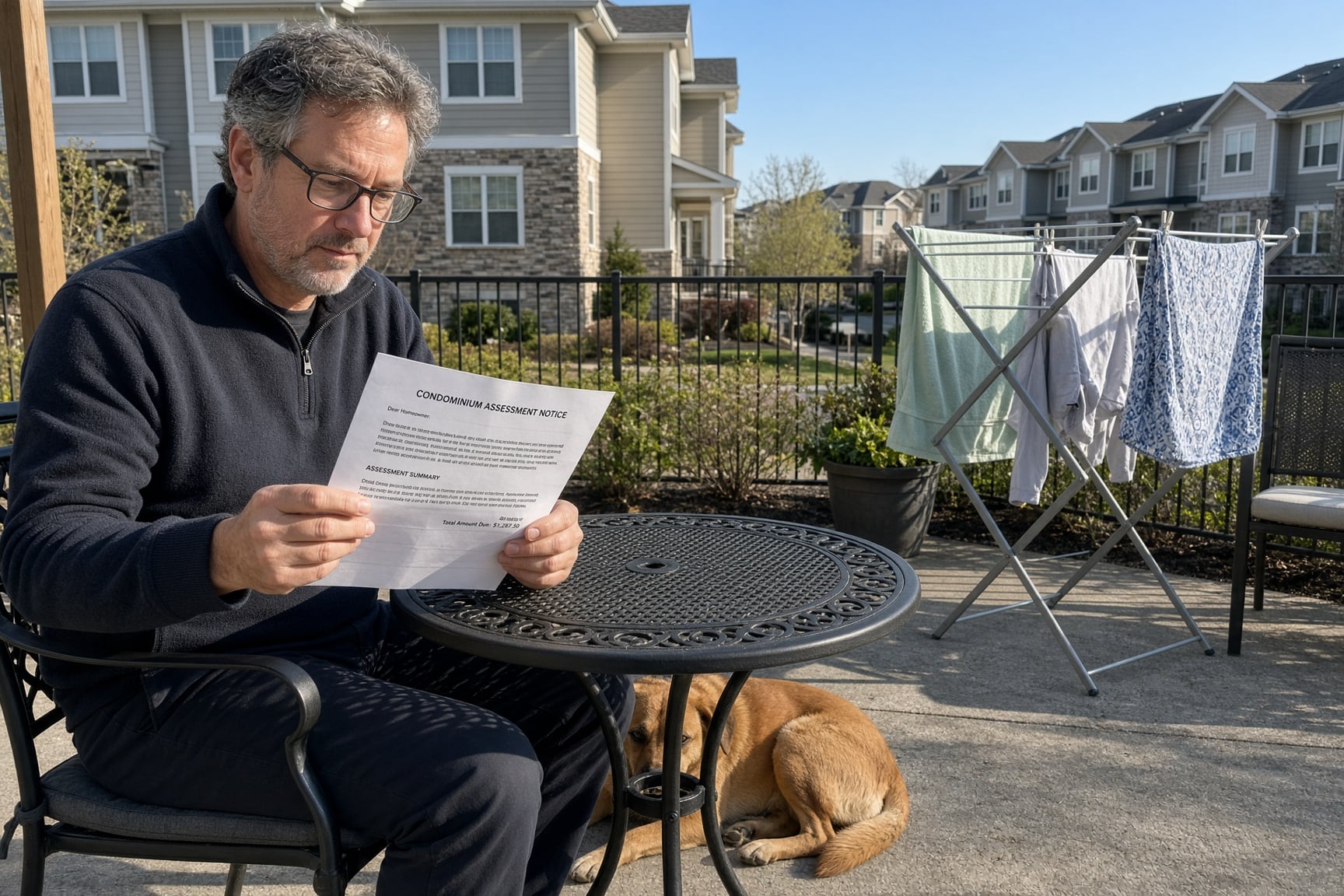
The renewal notice arrives with a premium that is double last year’s number, a higher deductible, and a shorter list of covered perils. The board still has to keep the association insured. Owners still have to live in the building. Between those two facts sits Civil Code section 5605, which limits how much money the board can raise without a membership vote, and section 5610, which defines the narrow emergencies that allow the board to exceed that limit. Boards that treat a doubled premium as an automatic emergency often discover the difference only after owners start collecting signatures for a recall. The statute is specific. The insurance market is not. The gap between the two is where most of the current conflict lives.
Premium spikes and coverage reductions are widespread in California. Carriers have left the market, rebuild costs have risen, and wildfire losses have reset pricing. Associations that kept dues flat for years now face a single-line-item increase that can exceed the board’s unilateral authority under section 5605. The question is not whether the increase is real. The question is which statutory path the board uses to pay for it, and whether that path matches the facts the board can actually document.
What Section 5605 Allows Without a Vote
Civil Code section 5605 sets two numerical limits on the board’s authority. The board may not impose a regular assessment that is more than 20 percent greater than the regular assessment for the preceding fiscal year without the approval of a majority of a quorum of members. Separately, the board may not impose special assessments that in the aggregate exceed 5 percent of the association’s budgeted gross expenses for that fiscal year without the same membership approval. The word “aggregate” matters. The board cannot split one large insurance shortfall into several smaller special assessments across the same fiscal year and claim each one stays under the limit. Once the cumulative total of special assessments for the year crosses 5 percent of budgeted gross expenses, the membership vote is required.
An insurance premium is a legitimate association expense. Covering an increase that stays inside the 5 percent aggregate ceiling is within the board’s ordinary authority. Covering an increase that pushes the total special assessments for the year above that ceiling is not, unless one of the emergency exceptions in section 5610 applies. Boards that calculate the 5 percent figure only after they have already decided to levy the assessment often find the number is smaller than they assumed. Coordinated financial management that tracks both the insurance renewal and the year-to-date special-assessment total makes the ceiling visible before the notice goes out.
Section 5605(a) adds a further condition. The board may not impose an annual increase in regular assessments unless it has already complied with the relevant portions of the annual budget report requirements in section 5300, or it has obtained membership approval. A board that has not distributed a complete budget report cannot rely on the 20 percent regular-assessment authority even if the dollar amount would otherwise fit. The statute ties the board’s unilateral power to the prior distribution of accurate financial information.
Why Section 5610 Usually Does Not Cover an Insurance Premium
Section 5610 states that section 5605 does not limit assessment increases necessary for emergency situations. It then defines three categories. The first is an extraordinary expense required by an order of a court. The second is an extraordinary expense necessary to operate, repair, or maintain the development where a threat to personal health or safety or another hazardous condition is discovered. The third is an extraordinary expense necessary to repair or maintain the development that the board could not have reasonably foreseen when it prepared and distributed the annual budget report. Before an assessment is imposed under the third category, the board must pass a resolution containing written findings on the necessity of the expense and why it was not reasonably foreseeable, and that resolution must be distributed to the members with the notice of assessment.
A doubled insurance premium rarely fits any of the three. There is usually no court order requiring the association to pay a particular carrier a particular amount. An insurance premium is not, by itself, a threat to personal health or safety or a hazardous condition on the property. And the third category is limited to expenses necessary to repair or maintain the development. The statute used the word “operate” in the second category and omitted it from the third. Market-driven premium increases are operating expenses. They are not, under the ordinary reading of the statute, unforeseen repair or maintenance costs. Some boards and some counsel have argued that a sudden, dramatic premium increase can be treated as unforeseeable under the third category. That argument has not been resolved by an appellate decision, and the safer reading is that it does not qualify. Boards that rely on section 5610 for an insurance premium without a clear fit to one of the three categories create a procedural defect that owners can later challenge.
Even when an emergency is genuine, section 5610 only authorizes the amount necessary to address the emergency itself. The board cannot use an emergency finding to fund unrelated projects or to pre-fund future premiums. The assessment must still be limited to the extraordinary expense the statute describes. Compliance support that reviews both the renewal terms and the statutory categories before the assessment is levied reduces the chance that the board discovers the mismatch after owners have already received the notice.
Notice, Aggregate Limits, and the Recall Risk
Civil Code section 5615 requires the association to provide individual notice of any increase in regular or special assessments not less than 30 nor more than 60 days before the increased assessment becomes due. The notice period applies whether the assessment is within the section 5605 limits or is claimed under section 5610. Late or missing notice is an independent procedural defect. Owners who receive a large assessment with less than 30 days’ notice often treat the entire levy as invalid even when the underlying dollar amount would have been supportable under the correct procedure.
The aggregate rule creates a second practical constraint. An association that has already levied a special assessment earlier in the fiscal year for a different purpose has less remaining capacity under the 5 percent ceiling. Boards that track only the current insurance shortfall and ignore prior special assessments for the same year can exceed the limit without realizing it. The membership vote, when required, is a majority of a quorum under section 4070. It is not a simple majority of those who happen to attend. Associations that call the vote without confirming the quorum calculation often fail to obtain the required approval and then have no statutory authority to collect the assessment.
Owners who believe the board has misapplied section 5605 or section 5610 can request records under section 5200, demand the written findings if section 5610(c) was claimed, and, if the defect is clear, pursue enforcement. In communities where the premium increase is large relative to the existing budget, those disputes frequently become recall efforts. The board that can show it calculated the 5 percent ceiling, stayed inside it or obtained the required vote, and provided timely notice spends less time defending the assessment and more time placing the coverage. The board that cannot show those steps spends the next several months answering the same questions in writing. Board and administrative support that maintains the running total of special assessments and the supporting resolutions makes that documentation available before it is requested.
Practical Steps When the Premium Has Already Doubled
Boards facing a current renewal that exceeds the remaining section 5605 capacity have three ordinary paths. They can levy a special assessment that stays inside the remaining 5 percent aggregate amount and fund the balance from reserves or a future regular assessment increase. They can call a membership vote under section 5605 for the full amount. Or they can restructure the coverage—higher deductible, reduced limits, or a combination of admitted and residual-market policies—so the premium itself fits inside the available authority. Each path has trade-offs. A higher deductible shifts risk to owners through future special assessments if a claim occurs. Reduced limits leave the association underinsured. A membership vote takes time and may fail. None of those trade-offs is eliminated by labeling the premium an emergency under section 5610 when the statute does not support the label.
Associations that have already accepted a higher deductible or reduced coverage still need a clear owner communication that states the current deductible, the remaining coverage gaps, and the board’s intended funding method for any shortfall. The statutory insurance summary required by section 5300 already requires disclosure of the deductible. Adding the practical per-unit exposure and the board’s funding decision turns that disclosure into information owners can use when they review their own policies. East Bay associations that have handled doubled premiums without a later recall have generally done so by calculating the section 5605 ceiling first, documenting the decision, and sending the notice with more than the minimum 30 days. SLPM Association Management Services has coordinated insurance renewals, assessment calculations, and owner notices for East Bay associations since 1991. If your board is reviewing a renewal that will require a special assessment and has not yet confirmed whether the amount fits inside section 5605 or requires a vote, the free proposal process lets you see the current capacity and the missing documentation before the notice is issued.
Request your free association management proposal here. We will review your current insurance renewal, year-to-date special assessments, and recent budget reports and identify the section 5605 and section 5610 items that are still open.
Sources
- California Civil Code § 5605 (limits on regular and special assessments)
- California Civil Code § 5610 (emergency assessment exceptions)
- California Civil Code § 5615 (notice of assessment increases)
- California Civil Code § 5300 (annual budget report requirements)
- Los Angeles Times, “California condo fees are soaring. Some owners fear they can’t survive” (October 2026)