
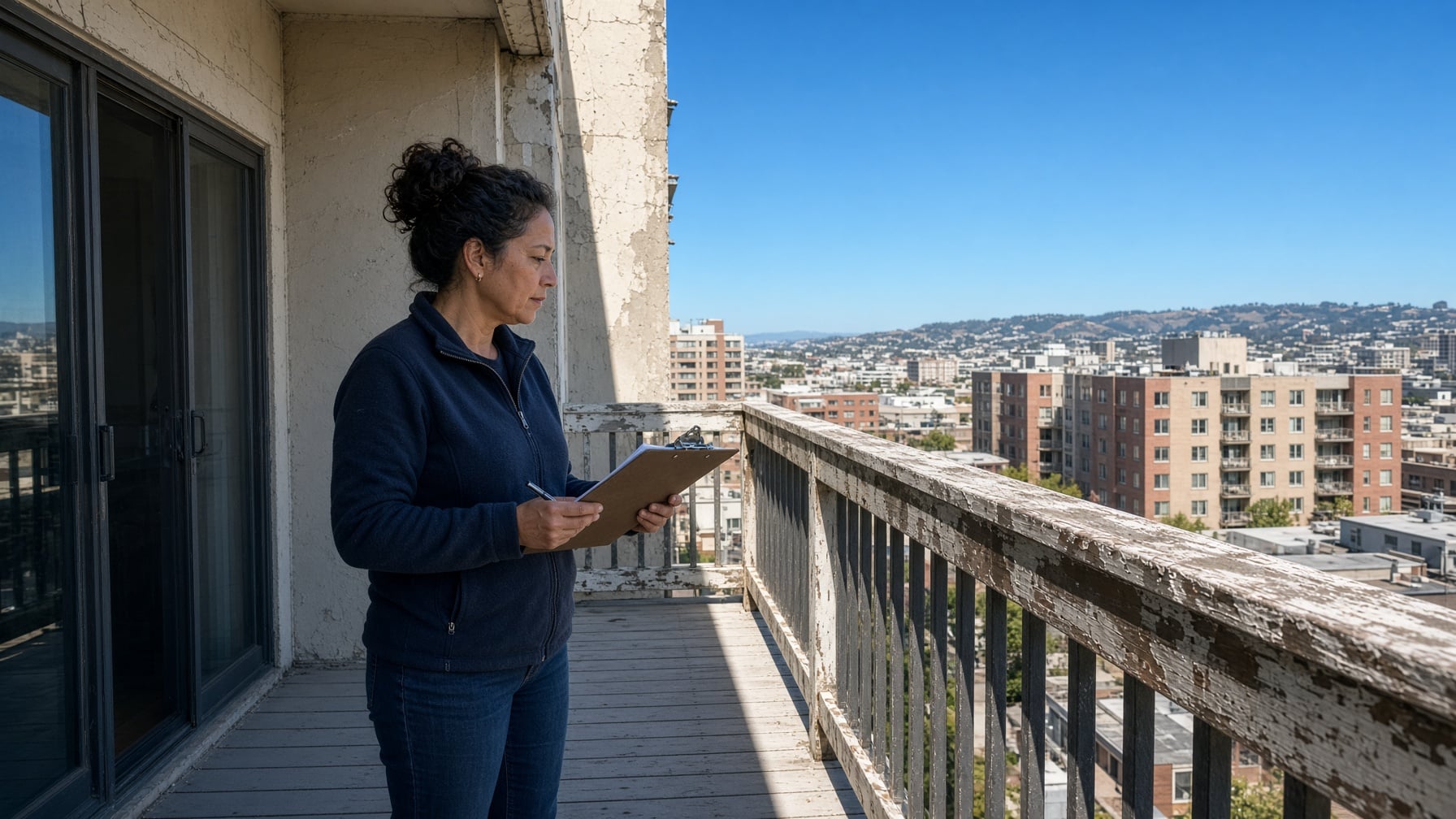
For years the pitch for self-management was simple: keep the dues flat, handle the invoices ourselves, and avoid paying a management company. That worked when insurance renewals were routine, reserve studies were optional reading, and the biggest annual project was re-striping the parking lot. It works less well when a carrier non-renews the master policy in October, the balcony inspection report that was due last January still does not exist, and the roof that the last reserve study said had five years left is leaking into three units. Volunteer boards that spent a decade protecting owners from assessment increases are now the ones explaining five-figure special assessments. Professional management is often cheaper than the alternative once those bills arrive, because the alternative is no longer a higher monthly dues figure. It is an emergency assessment plus the time the board spends defending it.
The associations hitting the wall first are usually the ones that treated “keeping dues flat” as the primary goal rather than one constraint among several. Insurance, required inspections, and reserve funding do not pause because the board prefers not to raise assessments. When those items are deferred, the cost does not disappear. It concentrates.
Insurance That No Longer Fits the Old Budget
California association master policies have become harder to place and more expensive to renew. Deductibles on water and earthquake coverage have risen, some carriers have left the market, and non-renewals arrive with short notice. A self-managed board that receives a renewal quote 40 percent higher than last year has to decide, usually in a few weeks, whether to absorb the increase, raise the deductible, drop coverage that owners and lenders expect, or call a special meeting. The decision has to be documented. Civil Code section 5300 requires the annual budget report to include a summary of the association’s property, liability, and other insurance policies, including limits and deductibles. Owners who later face a large loss-assessment claim will look at that disclosure.
Special assessments to cover insurance increases are possible, but they are constrained. Civil Code section 5605 generally limits board-imposed special assessments to 5 percent of the association’s budgeted gross expenses for the fiscal year without a membership vote. Insurance premium increases do not automatically qualify as the emergency exceptions in section 5610. A board that has kept regular assessments flat for years often discovers that the insurance increase alone exceeds what it can levy without going to the members. The members, who have not seen a dues increase in a decade, are then asked to approve a large one-time charge for a policy they cannot easily inspect. Full-service financial management that includes early renewal coordination and clear disclosure reduces the chance that the first time owners hear about the insurance problem is when the special assessment notice arrives.
Reserves That Were Studied but Not Funded
California has long required associations to perform a reserve study with a visual inspection of major components at least every three years and to review the study annually. It has not required associations to fund the study’s recommended contributions. Many self-managed boards used that distinction to keep monthly assessments lower. The study went into the file. The recommended contribution did not go into the budget. The gap accumulated.
Assembly Bill 2050, signed in September 2026, changes the funding side beginning January 1, 2032. Starting then, each reserve study must identify the minimum annual contribution needed to keep the projected reserve balance from falling below zero over the following 30 years, and the association must fund at least that amount. If the projection shows a negative balance at any point in those 30 years, the association must transfer at least 15 percent of its gross annual budget to reserves each year until the projection is no longer negative. If the regular budget cannot cover the minimum, the board must levy a reserve-funding special assessment subject to the ordinary limits in section 5605, and that particular assessment may not be levied more than once every nine years. Associations that enter 2032 with chronically underfunded reserves will have fewer options and less time. Boards that commission an updated study now and begin closing the gap in the next few budget cycles will face smaller adjustments later. Those that continue to treat the study as informational only will meet the 2032 requirement with a larger shortfall and a membership that has not been prepared for it. Coordinated compliance support that tracks reserve-study deadlines and funding recommendations keeps the gap visible before it becomes a statutory problem.
Inspections That Were Due and Still Are Not Done
Civil Code section 5551, enacted through SB 326, requires condominium associations with buildings of three or more units to inspect exterior elevated elements—balconies, decks, stairways, walkways, and landings more than six feet above grade that the association is obligated to maintain and that are substantially supported by wood. The first inspection was due by January 1, 2025. Subsequent inspections are required every nine years. The inspector must be a licensed structural engineer, civil engineer, or architect. A statistically significant sample is required. Associations that have not completed the inspection are already past the deadline. The report, once obtained, becomes an association record that members may request. Findings that identify immediate safety issues or remaining useful life shorter than the board assumed will drive repair costs that were not in the last reserve study.
Self-managed boards sometimes delay the inspection because the cost of the engineer is unbudgeted or because they expect the report to recommend work they cannot currently fund. The delay does not remove the requirement, and it does not prevent an owner or a buyer’s lender from asking whether the inspection has been completed. When the report finally arrives and lists multiple components that need repair within two years, the board must either fund the work from reserves it does not have or propose a special assessment. The assessment conversation is harder when the inspection was already late. Proactive maintenance coordination that schedules the required inspection on the same cycle as the reserve study reduces the chance that the first time the board sees the structural findings is when an owner reports a soft spot in a balcony.
The Signs the Board Is Already Behind
Several patterns appear in associations that later face large emergency assessments. The reserve study is more than three years old or has never been reviewed in an open meeting. The annual budget report does not include a clear statement about anticipated special assessments. Insurance renewals are handled in the final weeks before expiration rather than months earlier. No one on the board can locate the most recent SB 326 report, or the report does not exist. Vendor contracts for major components were awarded without competitive bids. Meeting minutes from the last two years contain no discussion of the reserve funding plan. Owners who request records under Civil Code section 5200 receive incomplete or delayed responses. Any one of these items can be corrected. Several of them together usually mean the association has been operating on the assumption that nothing large will fail before the current board’s term ends.
When a major component does fail, or when a carrier non-renews, the board discovers that the tools available under section 5605 are limited and that the emergency exceptions in section 5610 are narrow. A membership vote becomes necessary for any assessment above the 5 percent aggregate threshold. Owners who have been told for years that dues would stay flat are then asked to approve a large charge on short notice. Some refuse. Delinquencies rise. The board spends additional time on collection procedures and owner communications that a managed association would already have systems for. Board and administrative support that includes organized records, timely disclosures, and calendar tracking for inspections and renewals does not eliminate the underlying costs. It does reduce the procedural defects that turn a necessary assessment into a contested one.
Why Professional Management Is Often Cheaper After the Wall Is Hit
The comparison most boards make is between the monthly management fee and the amount they currently collect in assessments. The comparison that matters more is between the management fee and the cost of the special assessment that becomes necessary when insurance, reserves, and inspections have been deferred. A management fee is a known operating expense. A special assessment of several thousand dollars per unit is a one-time charge that owners experience as a failure of planning. Associations that bring in professional management before the renewal season, the inspection deadline, or the reserve shortfall becomes acute can often adjust the regular assessment gradually and document the reasons. Associations that wait until the non-renewal letter or the engineer’s report arrives usually have only the special-assessment route left, and they have less time to explain it.
East Bay associations that have already made the transition report that the largest savings are not in the management fee itself. They are in avoided emergency vendor premiums, earlier insurance placement, completed inspections that identify repair needs while they are still fundable from reserves or modest assessment increases, and fewer owner disputes over process. SLPM Association Management Services has worked with self-managed and professionally managed associations in the East Bay since 1991. We already track the insurance renewal calendar, the reserve-study cycle, and the SB 326 inspection deadlines for the communities we serve. If your board has been keeping assessments flat and is now looking at an insurance increase, a missing inspection, or a reserve study that has not been funded, the free proposal process lets you see what the current gaps are before the next bill arrives.
Request your free association management proposal here. We will review your recent budget reports, reserve study, and insurance summary and identify which items are already behind.
Sources
- Assembly Bill 2050 (2025–2026), chaptered September 29, 2026 (reserve funding requirements operative January 1, 2032)
- California Civil Code § 5551 (SB 326 exterior elevated element inspections)
- California Civil Code § 5550 (reserve study requirements)
- California Civil Code § 5605 (assessment increase and special-assessment limits)
- California Civil Code § 5300 (annual budget report and insurance summary)
- California Civil Code § 5610 (emergency assessment exceptions)