East Bay buildings constructed in the 1960s–1980s are hitting the same wall at the same time. Civil Code section 5551 requires condominium associations with three or more multifamily dwelling units to inspect exterior elevated elements—balconies, decks, stairways, walkways, and their railings more than six feet above grade and supported substantially by wood—at least once every nine years. The first inspection was due by January 1, 2025. The statute was not extended for common interest developments. The later deadline that applies to rental apartment buildings under a different law does not apply here.
Associations that commissioned the inspection early have a report, a remaining-useful-life estimate, and time to fund the work. Associations that waited are now receiving reports that list immediate repairs and multi-year remaining life on components the reserve study never fully priced. The result is the assessment wave of 2026–2028.
Boards that schedule the inspection, incorporate the findings into the reserve study required by Civil Code section 5550, and plan the funding control the timeline. Boards that treat the inspection as optional inherit the emergency. For East Bay buildings of this age, early inspection and funding coordination preserve options.
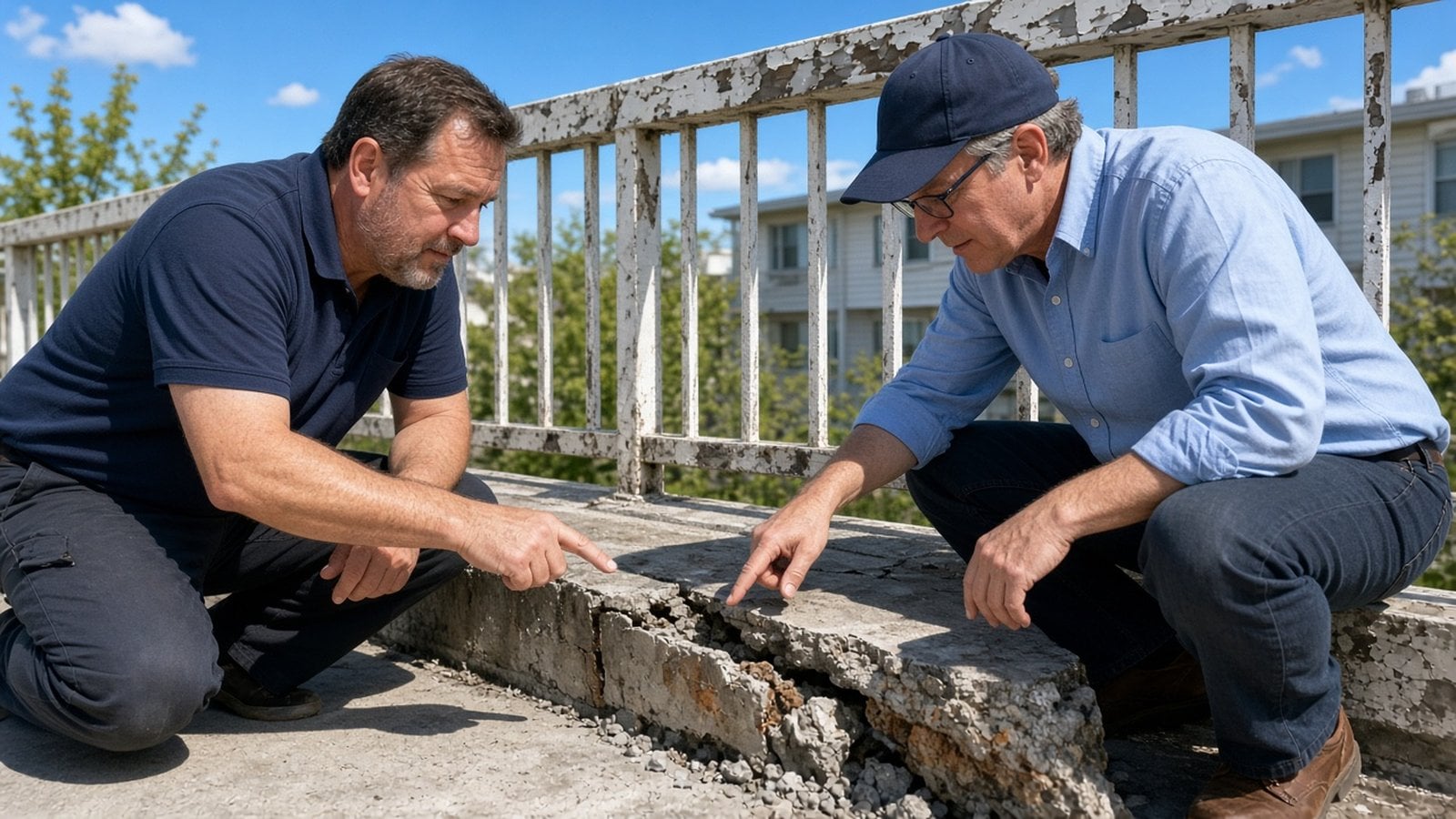
East Bay buildings constructed in the 1960s through the 1980s share the same original waterproofing, the same wood framing under the decks and walkways, and the same decades of deferred attention. When the required inspection samples those elements and finds decay, failed flashings, or shortened remaining life, the repair cost lands on associations that have kept dues flat and reserves thin.
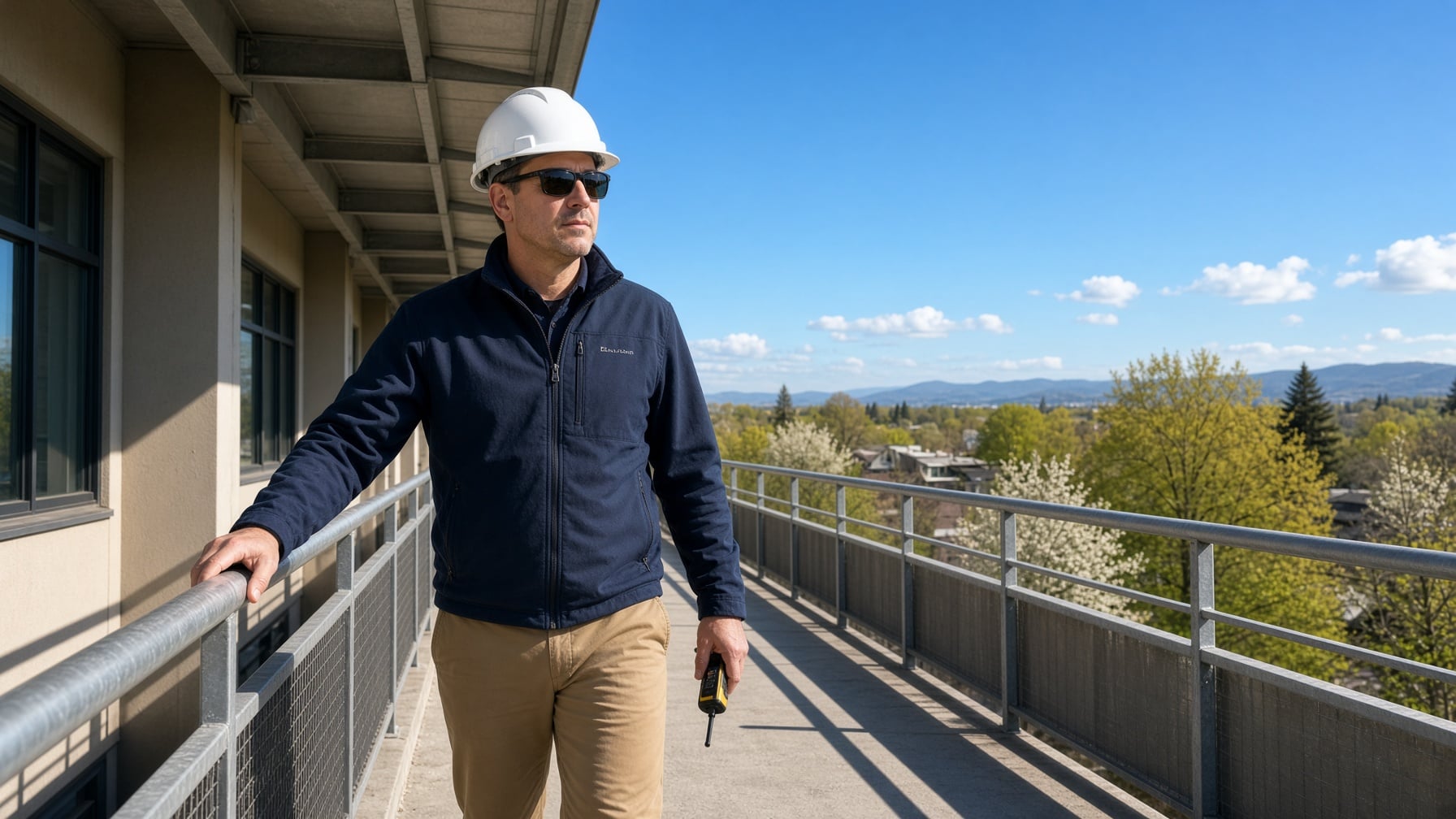
The inspection itself is a visual review of a statistically significant sample performed by a licensed structural or civil engineer or architect. The report identifies the load-bearing components and associated waterproofing systems, describes current condition, states whether any element poses an immediate threat, estimates remaining useful life, and recommends further inspection or repair.
Associations that receive the report and update the reserve study under section 5550 have a documented basis for the next budget and any special assessment. Boards can also review this East Bay reserve fund management guide when setting those funding plans. Associations that receive the report and continue the prior funding plan have a document that later shows the board knew the condition and did not act.
In East Bay buildings from that era, the waterproofing membranes and flashings were never designed for sixty years of East Bay weather. The inspection does not create the decay. It records the decay that has already occurred and places a remaining-life number on the components the prior reserve study treated as still serviceable.
What Section 5551 Actually Requires
Civil Code section 5551 applies to condominium projects with three or more multifamily dwelling units where the association has maintenance or repair responsibility for the elevated elements. The inspection must be performed by a licensed structural or civil engineer or architect. The sample must be random and statistically significant—sufficient to provide 95 percent confidence that the results reflect the whole, with a margin of error no greater than plus or minus 5 percent. The inspector issues a written report that identifies the components, describes their condition (including any immediate safety threat), estimates remaining useful life, and recommends repairs.
If the inspector finds an immediate threat, the association must restrict access and the inspector must notify the local enforcement agency within 15 days. The report becomes part of the association’s records and is incorporated into the reserve study. Associations that have completed the inspection and placed the report in the records have satisfied the statute. Associations that have not completed it remain out of compliance and face the same findings later, only with less time to fund the work.
The nine-year cycle is designed to align with the reserve study. Section 5550 already requires a visual inspection of major components at least every three years and an annual review. Section 5551 adds a more rigorous review of the elevated elements that most often fail in older wood-framed buildings. Associations that treat the two statutes as one process—commission the elevated-element inspection, update the reserve study with the findings, and adjust the funding plan—produce a single set of numbers that owners can examine.
Associations that treat them as separate exercises produce a reserve study that does not reflect the inspection the board was required to obtain. The report is also an association record under Civil Code section 5200. Members can request it. Once the inspection is complete, the findings are no longer internal. They are part of the file the association must maintain and produce.
Why East Bay Buildings Face the 2026–2028 Wave
The first-cycle deadline of January 1, 2025 concentrated the inspections. Many East Bay buildings from the 1960s–1980s that delayed the work are receiving reports now. The reports identify waterproofing failures, decay in the wood framing under decks and walkways, and remaining useful life shorter than the reserve study assumed. For East Bay buildings with thin reserves, the prior study does not spread repair costs over the next thirty years; the expenditure arrives in the next two or three years.
Associations that have reserves sufficient to absorb the work can fund it from existing accounts. Associations that do not must levy a special assessment under Civil Code section 5605 or increase regular assessments within the limits of section 5605. Because East Bay buildings are similar in age and construction, the findings are similar. The assessments therefore arrive in the same window. Owners who have not seen a special assessment in a decade are seeing one now, and the inspection report is the document that explains why.
Boards that commissioned the inspection in 2023 or 2024 had time to update the reserve study, obtain competitive bids, and present a funding plan before the work became urgent. Boards that waited until after the deadline have the same findings and less time. The statute does not create an emergency exception that allows the board to skip the membership vote on a special assessment simply because the inspection was late. Section 5610’s emergency exceptions remain narrow.
The practical result is that the association either funds the work under the ordinary assessment rules or faces the claim that the board delayed the required inspection and then sought to treat the consequences as an emergency. In associations that have already levied the assessment, owners are asking whether the board obtained competitive proposals for the repair work and whether the minutes record the evaluation. The inspection report explains the condition. The bidding file and the minutes explain the cost.
Funding the Work Without Treating It as an Emergency
Section 5605 limits the board’s ability to increase regular assessments or levy special assessments without a membership vote. The 5 percent regular-assessment limit and the special-assessment threshold still apply. A large repair identified by the section 5551 inspection does not automatically qualify as an emergency under section 5610. The emergency exceptions are limited to situations that could not have been reasonably foreseen and that require immediate action to avoid substantial damage or personal injury.
A delayed inspection that produces a report listing multi-year remaining life does not meet that standard. Associations that plan the funding under the ordinary rules of section 5605—whether by a special assessment that stays within the board’s authority or by a membership vote for a larger amount—keep the decision inside the statute. Associations that attempt to characterize the entire cost as an emergency assessment face the later claim that the board used the narrow exception to avoid the vote the statute requires.
The reserve study update is the bridge between the inspection and the assessment. Section 5550 requires the board to review the study annually and to implement necessary adjustments. When the elevated-element inspection shortens the remaining useful life of decks, walkways, or waterproofing, the funding plan must change.
Associations that revise the study, disclose the change in the annual budget report required by section 5300, and then levy the assessment under section 5605 produce a sequence owners can follow. Associations that leave the prior study unchanged and levy an assessment anyway produce a gap between the disclosed numbers and the amount being collected.
What Boards That Act Early Still Control
The board that schedules the inspection, incorporates the findings into the reserve study, and places a funding plan on the agenda keeps the timeline inside the statutes. The board that confirms whether the elevated elements are association responsibility under the CC&Rs, retains a qualified inspector, and records the receipt of the report in the minutes produces the file owners later examine.
Coordinated compliance and legal support that tracks the inspection deadline, coordinates the engineer or architect, and updates the reserve study keeps the process inside Civil Code sections 5551 and 5550 while the board focuses on the funding decision.
SLPM Association Management Services has coordinated elevated-element inspections and reserve-study updates for East Bay associations since 1991. If your board has not yet completed the section 5551 inspection or has received a report that changes the reserve numbers, the free proposal process lets you review the current inspection status, the reserve study, and the steps required to fund the work under the ordinary assessment rules.
Request your free association management proposal here. We will review your inspection status under Civil Code section 5551, the current reserve study, and the steps required to plan funding before the work becomes urgent.
Sources
- California Civil Code § 5551 (inspection of exterior elevated elements)
- California Civil Code § 5550 (reserve study requirements)
- California Civil Code § 5605 (assessment increases and special assessments)
- California Civil Code § 5610 (emergency assessment exceptions)
- California Civil Code § 5200 (member right to inspect association records)
- California Civil Code § 5300 (annual budget report)