
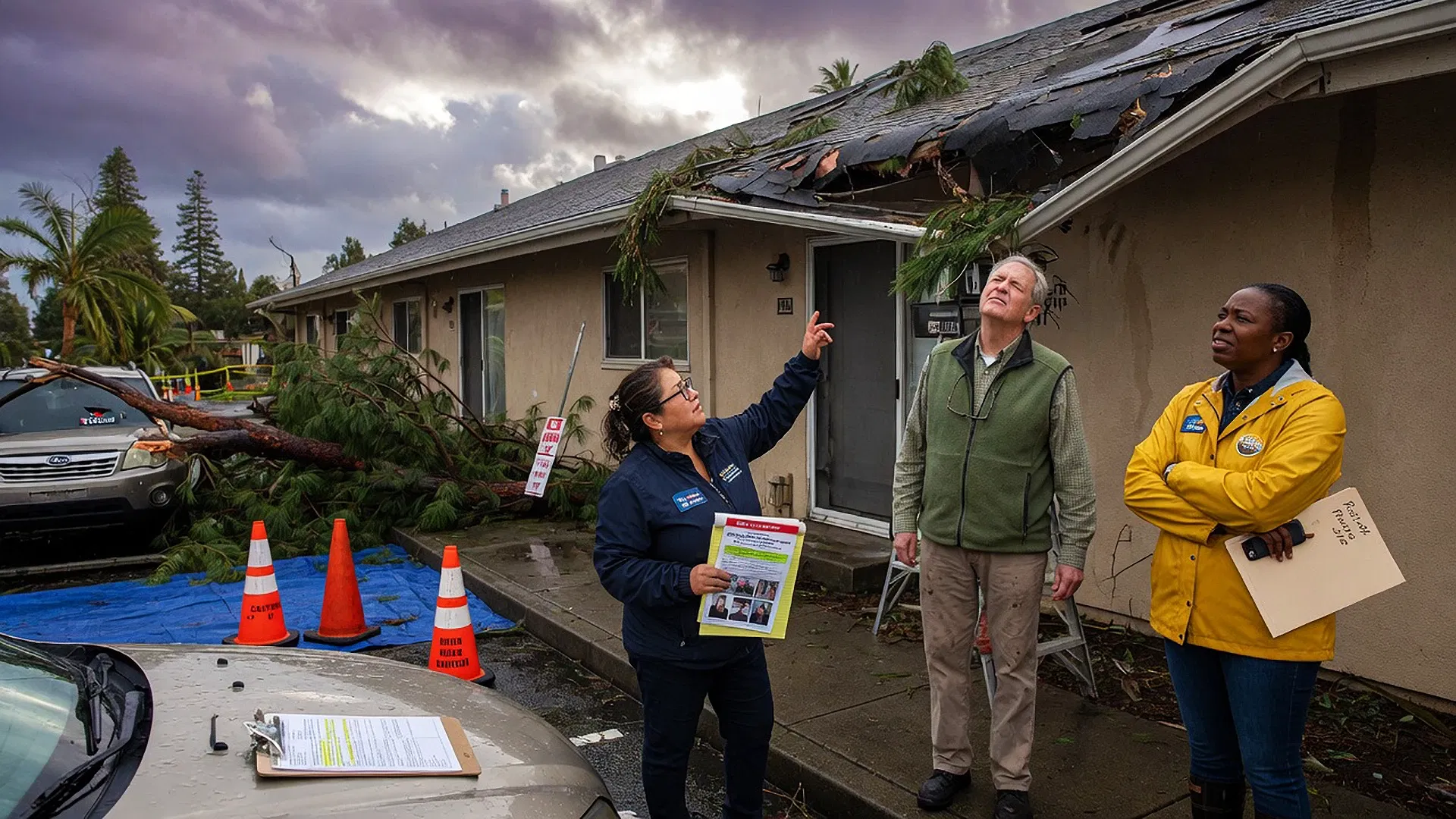
Insurance Just Doubled Again: Why Most Northern California HOAs Are Now Underinsured and One Storm Away from Disaster
For many Northern California HOAs, the insurance renewal packet has become the most dreaded document of the year. Premiums jump. Deductibles rise. Coverage gets narrower. Carriers ask new wildfire, roof, electrical, plumbing, and vegetation questions. The broker says the market is tight. The board asks for alternatives and hears the answer no one wants: there may not be many.
In the East Bay, this is not just a hillside wildfire problem. Oakland, San Leandro, Alameda, Hayward, Castro Valley, Fremont, Walnut Creek, Concord, and mixed-use communities across the region are feeling the pressure from wildfire risk, rebuilding costs, storm damage, aging infrastructure, litigation exposure, reserve underfunding, and carrier retreat.
Some communities are not uninsured. They are underinsured, which can be even more dangerous. They have a policy, but not enough limits. They have fire coverage, but missing wraparound protection. They have a lower premium, but a brutal deductible. They have coverage for the building, but exclusions or gaps that leave the board exposed after a major event.
The problem is no longer just premium shock. The deeper risk is that an HOA may think it is protected until one storm, fire, pipe failure, or liability claim exposes a coverage gap large enough to trigger emergency assessments and owner revolt.
SLPM Association Management Services helps East Bay HOAs, business parks, and mixed-use communities navigate these difficult insurance conversations with organized budgets, documentation, broker coordination, owner communication, risk planning, and board support.
Why Insurance Costs Are Exploding for Northern California HOAs
Insurance carriers are pricing a different risk environment than the one many boards remember. For years, some associations budgeted insurance as a predictable annual line item. That era is over.
Today, carriers are looking closely at:
- Wildfire exposure, even outside obvious hillside zones.
- Wind, storm, drainage, and water intrusion claims.
- Older roofs, decks, balconies, siding, and building envelopes.
- Electrical, plumbing, and mechanical system age.
- Tree maintenance, defensible space, and vegetation control.
- Prior claims history.
- Construction type and replacement cost.
- Mixed-use commercial activity, restaurants, signage, parking, and public access.
- High rebuilding costs in the Bay Area.
- Whether the association has strong maintenance records and reserve planning.
The result is a market where some boards see renewal increases that feel impossible, while others face nonrenewal, reduced limits, higher deductibles, forced carrier changes, or movement into layered and more complicated insurance programs.
The Carrier Pullback Is Real
This is not just board paranoia. Major carriers have openly pulled back from California property risk.
In March 2024, State Farm General announced it would nonrenew approximately 30,000 homeowners, rental dwelling, and other property insurance policies, including residential community association and business owners policies. It also announced it would withdraw from offering commercial apartment policies by nonrenewing about 42,000 of those policies. State Farm cited inflation, catastrophe exposure, reinsurance costs, and limits within California’s insurance regulations as factors.
Other carriers have also limited or paused new California homeowners business in recent years. These decisions create a squeeze: fewer voluntary market options, more pressure on remaining insurers, and more communities pushed toward last-resort or layered coverage.
Board reality: If your association receives a nonrenewal or major coverage reduction, you may not have the luxury of shopping slowly. The replacement options may be expensive, incomplete, or available only with major conditions.
The FAIR Plan Is Growing Because the Regular Market Is Not Working for Everyone
The California FAIR Plan is designed as an insurer of last resort for basic property coverage when voluntary market options are not available. Its growth shows how stressed the market has become.
The California FAIR Plan reports that, as of December 2025, its total exposure reached $724 billion, a 230 percent increase since September 2022. Its total dwelling and commercial policies in force reached 668,609, a 146 percent increase since September 2022.
That growth matters for HOAs and mixed-use properties because it reflects a broader availability problem. When more properties depend on last-resort coverage, boards should assume that insurance placement, renewal timing, deductible planning, and coverage comparison need far more attention than they used to.
Important coverage warning: FAIR Plan coverage is not the same as a full traditional commercial property or HOA master policy. Associations may need companion or difference-in-conditions coverage to address risks not covered by the base policy. Boards should review all gaps with a qualified insurance broker and association counsel.
Underinsured Does Not Always Mean Uninsured
A board may proudly say, “We have insurance.” That is only the starting point. The real question is whether the association has the right insurance, in the right amount, with deductibles and exclusions the community can survive.
Underinsurance can appear in several ways:
- Replacement cost gap: policy limits do not match current Bay Area rebuilding costs.
- Deductible shock: the deductible is so high that a major claim still requires a special assessment.
- Wildfire gap: fire coverage exists but is layered, limited, or dependent on separate policies.
- Water damage gap: storm, plumbing, sewer, or water intrusion claims may be limited or excluded.
- Ordinance and law gap: coverage may not fully address code upgrade costs after a loss.
- Loss of use or business interruption gap: mixed-use or commercial impacts may not be adequately addressed.
- Liability gap: public-facing areas, parking lots, sidewalks, commercial visitors, pools, gyms, or elevators may increase exposure.
- D&O gap: directors and officers may be underprotected when owners sue over insurance, assessments, repairs, or governance decisions.
- Fidelity or crime gap: required coverage may not match reserves, assessments, electronic funds transfer risk, or governing document requirements.
Underinsurance is often discovered too late: after the fire, after the roof failure, after the storm, after the slip-and-fall claim, after the pipe burst, after the lender inquiry, or after an owner asks why the association did not disclose the deductible jump.
Why Mixed-Use Properties Are Hit Even Harder
Mixed-use associations can be especially difficult to insure because they combine residential exposure with commercial operations. A property may include condos above retail, restaurant grease systems, public sidewalks, parking facilities, deliveries, commercial signage, security systems, elevators, trash enclosures, loading areas, and multiple types of occupants.
A pure residential HOA might worry about roofs, water damage, liability, and wildfire exposure. A mixed-use association may have all of that plus customer traffic, business interruption questions, tenant improvements, commercial equipment, restaurant waste, public access, and higher complexity around who owns or maintains what.
Carriers may ask:
- What businesses operate onsite?
- Are there restaurants, cooking operations, grease systems, or commercial exhaust?
- Who controls parking and loading areas?
- How are commercial and residential utilities separated?
- What fire suppression systems exist?
- Who maintains storefronts, signs, awnings, patios, and sidewalks?
- Are tenants required to carry their own coverage and name the association as additional insured where appropriate?
- How are claims allocated when a commercial space affects residential units?
Mixed-use insurance rule: the more complicated the property, the more important it is to align insurance, governing documents, leases, vendor contracts, maintenance responsibility, and owner communication before a claim happens.
Fictionalized Composite Examples: How Coverage Gaps Become Disasters
The following examples are fictionalized composites based on common insurance and HOA risk patterns. They are not descriptions of specific associations, claims, lawsuits, brokers, or carriers. They are included to show how underinsurance can create financial and governance crises.
The East Bay HOA That Renewed Late and Lost Its Options
A mid-sized condominium association received a renewal quote that was almost double the prior year’s premium. The board delayed action because directors wanted more quotes. By the time the board authorized the broker to move forward, several markets were no longer available and the remaining quote had a higher deductible.
The board assumed insurance shopping worked like ordinary vendor bidding: ask several companies, wait for a better price, and negotiate near the deadline.
The association accepted worse terms because it ran out of time. Owners were furious when they learned the premium increased and coverage narrowed.
The painful lesson was that insurance renewal is no longer a last-minute budget task. It is a risk-management project that may need to begin months before expiration.
The Mixed-Use Property With a Fire Gap
A mixed-use building had residential units above commercial spaces. After a carrier nonrenewal, the association pieced together replacement coverage with separate policies. The premium was painful, but the board focused on avoiding a lapse.
The board believed replacement coverage meant the community was protected.
A small commercial fire led to disputes over deductibles, tenant improvements, code upgrades, smoke damage, business impacts, and what the association policy did not cover.
The board had not fully explained coverage gaps, tenant insurance requirements, or owner responsibility before the loss. The claim became a trust crisis as much as an insurance problem.
The Storm Deductible That Became a Special Assessment
An older East Bay HOA accepted a higher deductible to keep the annual premium from overwhelming the budget. Months later, a winter storm damaged roofs, gutters, drainage systems, and common-area interiors.
Owners were relieved that the board avoided an immediate large dues increase.
The deductible and uncovered work required a special assessment. Owners accused the board of hiding the true cost of the insurance decision.
The board had disclosed the premium, but not the practical meaning of the deductible. The community learned that a lower premium can shift risk from the carrier back to owners.
The Hillside Community That Could Not Replace Full Coverage
A small hillside association near open space received a nonrenewal notice. The broker searched the admitted, surplus, and last-resort markets, but the association could not obtain the same limits at a price owners could absorb.
Owners thought insurance was expensive but routine. Many assumed the board could simply “find another carrier.”
Replacement coverage came with lower limits, higher premiums, and new mitigation requirements. Mortgage and resale questions followed.
The board survived only because it communicated early, held owner meetings, showed broker correspondence, explained the market, and created a mitigation plan.
California HOA Insurance Duties Boards Should Understand
California law does not simply let boards treat insurance as a private vendor issue. Insurance information is part of the annual budget and owner disclosure framework.
Civil Code Section 5300 requires associations to distribute an annual budget report 30 to 90 days before the end of the fiscal year. That report includes, among other items, summaries related to reserves, funding, deferred maintenance, anticipated special assessments, and insurance.
Civil Code Section 5810 requires the association to give individual notice to members if policies described in the annual budget report lapse, are canceled, are not immediately renewed, restored, or replaced, or if there is a significant change such as a reduction in coverage or limits or an increase in deductible.
Civil Code Section 5800 also ties certain volunteer director and officer liability protections to the association maintaining specified general liability and individual liability coverage. Civil Code Section 5806 requires certain crime, employee dishonesty, fidelity bond, or equivalent coverage, unless the governing documents require more.
Board takeaway: insurance changes are not just broker updates. They can affect disclosures, owner notices, director protection, reserve planning, lender expectations, resale confidence, and special assessment risk.
What Boards Must Ask Before Accepting a Cheaper Policy
In a hard market, boards may be tempted to choose the quote with the lowest premium. That can be dangerous if the lower price is achieved through reduced limits, higher deductibles, narrower coverage, missing endorsements, or exclusions the board does not understand.
Before accepting a quote, boards should ask:
- Are property limits based on current replacement cost?
- What deductibles apply to fire, water, wind, earthquake, flood, sewer backup, or other losses?
- Are there separate wildfire, brush, or named peril limitations?
- Does the policy include ordinance and law coverage?
- Are roofs, decks, balconies, exterior stairs, retaining walls, gates, elevators, and mechanical systems treated differently?
- Are there exclusions for older electrical, plumbing, roofs, or building systems?
- Does the policy cover common-area structures and association-responsible components identified in the governing documents?
- For mixed-use properties, are commercial exposures properly disclosed?
- Are commercial tenants required to carry coverage and provide certificates?
- Does the D&O policy protect directors from governance disputes related to assessments, insurance, and repairs?
- Does fidelity or crime coverage meet statutory and governing document requirements?
- What owner notice is required if coverage, limits, or deductibles materially change?
A premium reduction that creates a major uncovered exposure is not savings. It is risk transfer from the carrier to the owners.
The Hidden Board Risk: Owners Blame the Board After the Claim
Insurance is one of those issues owners often ignore until something goes wrong. After a loss, every insurance decision becomes subject to criticism.
Owners may ask:
- Why did the board accept such a high deductible?
- Why were the limits too low?
- Why was wildfire or water damage coverage incomplete?
- Why did the board not tell us coverage changed?
- Why are we being special assessed if we had insurance?
- Why did the board not require the commercial tenant to carry better coverage?
- Why did the reserve study not anticipate the repair costs?
Some of those questions may be unfair. But they become powerful if the board has poor minutes, weak broker documentation, unclear owner notices, or no written explanation of why the insurance decision was made.
Documentation protects trust. Boards should preserve broker recommendations, coverage comparisons, rejected options, mitigation requirements, board minutes, owner notices, and the reasoning behind major insurance decisions.
One Storm Away: Why Deductibles Matter as Much as Premiums
Premiums get the headlines, but deductibles often create the disaster after the disaster. A community can have an insurance policy and still need a large emergency assessment if the deductible is too high or if the loss falls partly outside coverage.
Boards should model how the association would pay for:
- A roof or drainage loss during a major storm.
- Water damage from a common-area pipe failure.
- Fire damage affecting multiple units and common areas.
- Tree fall damage after high winds.
- Liability claims in common-area walkways, stairs, parking lots, or mixed-use public areas.
- Damage below the deductible.
- Uncovered code upgrades or exclusions.
The board should ask a simple question: if this deductible came due tomorrow, could the association pay it without panic?
Wildfire Is Not the Only Insurance Problem
Wildfire drives much of California’s insurance crisis, but East Bay associations should not ignore other risks.
Other major claim drivers include:
- Water intrusion: roofs, windows, siding, balconies, plumbing, drainage, and failed waterproofing.
- Storm damage: wind, trees, clogged drains, flooding, roof damage, and slope issues.
- Liability claims: slips, falls, trip hazards, pools, gyms, elevators, gates, stairs, and parking areas.
- Crime and cyber-related risk: funds transfer fraud, vendor payment fraud, and dishonest acts.
- Mixed-use exposure: restaurants, customers, deliveries, signage, sidewalks, commercial equipment, and business operations.
- Earthquake risk: often excluded from standard property policies and requiring separate evaluation.
A board that focuses only on fire may miss the claim most likely to hit the association next.
A 90-Day Insurance Survival Plan for East Bay Boards
Boards do not need to wait for the next renewal panic. A 90-day insurance readiness review can reduce surprises and improve the association’s position before the market forces a difficult choice.
Collect current policies, declarations, endorsements, deductibles, exclusions, certificates, prior claims, broker correspondence, governing document insurance requirements, and owner disclosures.
Compare coverage to actual association responsibilities: roofs, siding, balconies, decks, elevators, gates, pools, clubhouses, parking areas, commercial spaces, utilities, and common-area infrastructure.
Ask the broker to explain limits, deductibles, exclusions, ordinance and law coverage, water damage limits, wildfire restrictions, D&O, fidelity, crime, and mixed-use exposures in plain English.
Identify repairs, inspections, defensible space work, roof maintenance, electrical corrections, plumbing updates, tree work, drainage improvements, access control, and documentation that may improve insurability.
Model renewal scenarios: 25 percent increase, 50 percent increase, 100 percent increase, higher deductible, lower limits, nonrenewal, or layered replacement coverage.
Send a clear owner update explaining the market, the association’s current coverage, risks under review, possible budget impacts, and steps the board is taking.
How to Talk to Owners About Insurance Without Starting a Revolt
Insurance conversations can turn hostile because owners hear higher dues and assume board failure. Boards need to explain the market without sounding helpless.
Use Plain Language
Avoid leading with industry terms. Explain what changed, what the association controls, what it does not control, and what decisions the board must make.
Explain Premiums and Deductibles Together
Owners need to understand that a lower premium may mean higher owner exposure after a claim. Show the tradeoff.
Show the Broker Process
Tell owners how many markets were approached, what information was provided, and why certain options were unavailable or rejected.
Connect Insurance to Maintenance
If carriers care about roofs, electrical systems, trees, brush, decks, balconies, drainage, or claims history, owners need to understand why maintenance funding affects insurability.
Do Not Hide Bad News
Civil Code Section 5810 may require individual notice when there is a lapse, cancellation, nonreplacement, reduction in coverage or limits, or significant deductible increase. Even when a formal notice is not the only communication, boards should avoid vague statements that minimize the seriousness of coverage changes.
What Boards Should Demand From Brokers
A good broker relationship is critical in a hard market. Boards should not simply receive a quote and vote. They should ask for a clear explanation of risk, options, and tradeoffs.
Ask your broker for:
- A market summary listing carriers approached.
- A plain-English comparison of limits, deductibles, exclusions, and endorsements.
- Explanation of any nonrenewal or declination reasons.
- Replacement cost assumptions and whether updated valuations are needed.
- Wildfire, water, storm, and ordinance and law coverage explanations.
- D&O, fidelity, crime, cyber, umbrella, and liability recommendations.
- Specific mitigation steps that may improve renewal options.
- Timing recommendations for the next renewal cycle.
- Disclosure language the board can use for owner education.
What Professional Management Can Do Before the Next Renewal
Professional management does not replace the insurance broker or association counsel. But it can help the board organize the process so renewal decisions are made with better records, better timing, and better communication.
SLPM Association Management Services helps East Bay associations support insurance readiness by coordinating documents, maintenance records, board packets, broker communication, owner notices, budget planning, reserve study coordination, vendor follow-up, and mitigation tracking.
That structure matters because insurance underwriters often ask operational questions. A board that can show strong maintenance records, inspections, reserve planning, vendor documentation, tree work, roof work, safety repairs, and owner communications may be better positioned than a board scrambling to assemble information at the last minute.
Final Checklist: Do Not Let Insurance Become Your Next Disaster
- Start renewal planning months before policy expiration.
- Review coverage limits against current replacement costs.
- Understand deductibles before choosing a lower premium.
- Ask whether wildfire, water, storm, ordinance and law, and liability coverage are adequate.
- Confirm D&O, fidelity, crime, and funds transfer protections.
- For mixed-use properties, review commercial tenant insurance requirements.
- Document broker recommendations and board decisions.
- Give required owner notices when coverage changes significantly.
- Model how the association would fund deductibles and uncovered losses.
- Use maintenance and reserve planning to improve the association’s risk profile.
- Communicate early with owners before premium shock becomes assessment shock.
- Work with professional management, a qualified broker, and counsel before coverage gaps become claims disputes.
Do Not Wait Until the Claim to Learn You Were Underinsured
Skyrocketing premiums are painful, but the larger danger is hidden: coverage gaps, high deductibles, reduced limits, nonrenewals, and insurance decisions owners do not understand until after a disaster.
SLPM Association Management Services helps East Bay HOAs, business parks, and mixed-use communities manage insurance renewal pressure with better budgeting, documentation, owner communication, vendor follow-up, reserve planning, and board support.
If your board is worried about rising premiums, nonrenewal, wildfire exposure, storm risk, mixed-use insurance gaps, or owner backlash over insurance costs, SLPM Association Management Services can help your association build a more accountable process.
Request an Association Management ProposalLegal note: This article is for general educational purposes only and is not legal, insurance, financial, or risk-management advice. Insurance requirements, coverage terms, deductibles, exclusions, owner notice duties, lender requirements, and board obligations can vary based on current law, governing documents, policy language, claims history, property condition, and association-specific facts. Boards should consult qualified California association counsel, licensed insurance professionals, brokers, CPAs, reserve professionals, and risk-management advisors as appropriate.
Sources
- California FAIR Plan, Key Statistics and Data: https://www.cfpnet.com/key-statistics-data/
- Governor of California, Governor Newsom Signs Bipartisan Package of Bills Reforming California’s Insurer of Last Resort: https://www.gov.ca.gov/2025/10/09/governor-newsom-signs-bipartisan-package-of-bills-reforming-californias-insurer-of-last-resort/
- State Farm General Insurance Company, Update on California: https://newsroom.statefarm.com/update-on-california/
- Stanford Climate and Energy Policy Program, California FAIR Plan Residential Exposure: https://cepp.stanford.edu/focal-areas/wildfire-climate-resilience/insurance-adaptation/Interactive-Maps_California-FAIR-plan-exposure
- San Francisco Chronicle, California Wants Regular Insurers to Grow, But It Is the FAIR Plan That Is Growing Faster Than Ever: https://www.sfchronicle.com/california/article/home-insurance-fair-plan-20761285.php
- Associated Press, State Farm Discontinuing 72,000 Home Policies in California in Latest Blow to State Insurance Market: https://apnews.com/article/149da2ade4546404a8bd02c08416833b
- California Legislative Information, Civil Code Section 5300, Annual Budget Report: https://leginfo.legislature.ca.gov/faces/codes_displaySection.xhtml?lawCode=CIV§ionNum=5300.
- California Legislative Information, Civil Code Section 5800, Limitation of Officer and Director Liability: https://leginfo.legislature.ca.gov/faces/codes_displaySection.xhtml?lawCode=CIV§ionNum=5800.
- California Legislative Information, Civil Code Section 5806, Fidelity Bond and Crime Insurance Requirements: https://leginfo.legislature.ca.gov/faces/codes_displaySection.xhtml?lawCode=CIV§ionNum=5806.
- California Legislative Information, Civil Code Section 5810, Notice of Change in Insurance Coverage: https://leginfo.legislature.ca.gov/faces/codes_displaySection.xhtml?lawCode=CIV§ionNum=5810.
- CAL FIRE, Prepare for Wildfire: https://www.fire.ca.gov/prepare
- Ready for Wildfire, Wildfire Preparedness: https://www.readyforwildfire.org/